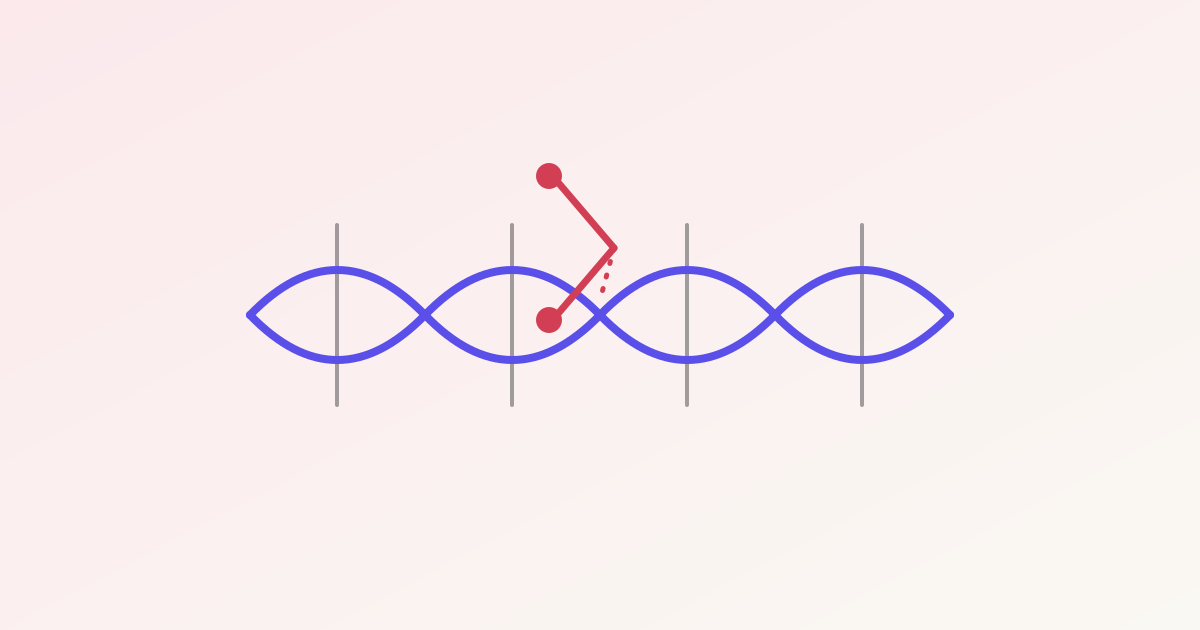
How CRISPR Edits DNA
CRISPR is often called "find-and-replace for the genome." It's a good analogy — here's the machinery behind it.
Borrowed from bacteria
CRISPR didn't start in a lab. It's a bacterial immune system. Bacteria keep snippets of DNA from viruses that once attacked them, filed between repeated sequences in their own genome — the "clustered regularly interspaced short palindromic repeats" the acronym names. When a virus returns, the bacterium copies those snippets into short RNA guides and dispatches a cutting protein to shred the matching viral DNA. It is, in effect, a molecular immune memory — the microbe's own version of the way a vaccine leaves a body primed for a returning threat — and a weapon honed over billions of years of the evolutionary arms race between microbes and their viruses.
In 2012, researchers showed this system could be reprogrammed to target any DNA sequence we choose. That's the tool now called CRISPR-Cas9.
The mechanism, step by step
- Write the guide. You build a short guide RNA carrying about 20 letters that spell out the DNA target you want to hit.
- Load the scissors. The guide snaps into Cas9, a protein that works as molecular scissors. Together they patrol the cell.
- Check for the permission tag. Cas9 will only cut next to a short signal sequence called a PAM. No PAM, no cut — a built-in safety latch.
- Match and unzip. Where the guide's letters pair with the DNA, the double helix is pried open and the guide locks on.
- Cut. Cas9 slices clean through both strands, leaving a double-strand break.
The cell does the actual editing
Here's the twist: Cas9 only cuts. The edit is performed by the cell's own repair crew rushing to mend the break, and it can go two ways:
- Delete / disable. Left alone, the cell glues the loose ends back together sloppily, often dropping or adding a few letters. That usually breaks the gene — handy for switching one off.
- Replace. If you also supply a DNA template carrying the change you want, the cell can copy it in as it repairs, writing your exact edit into the genome.
That's the find-and-replace picture: the guide is the search term, Cas9 is the cursor that cuts, and the repair machinery does the typing.
The caveats that matter
A guide only 20 letters long can also partly match similar sequences elsewhere, so Cas9 sometimes cuts the wrong spot — an off-target edit. A large slice of CRISPR research is about hunting those down and preventing them.
Other honest limits: editing rarely reaches 100% of cells, repair outcomes can be messy (including surprisingly large deletions), and edits made early in development can end up patchy across the body. Newer tools — base editors and prime editors — sidestep the brute double-strand cut and rewrite DNA more gently, trading some flexibility for far fewer accidental breaks.
The promise is real, and so is the fine print. CRISPR made editing DNA astonishingly easy; making it precise, predictable, and safe is the work still under way.