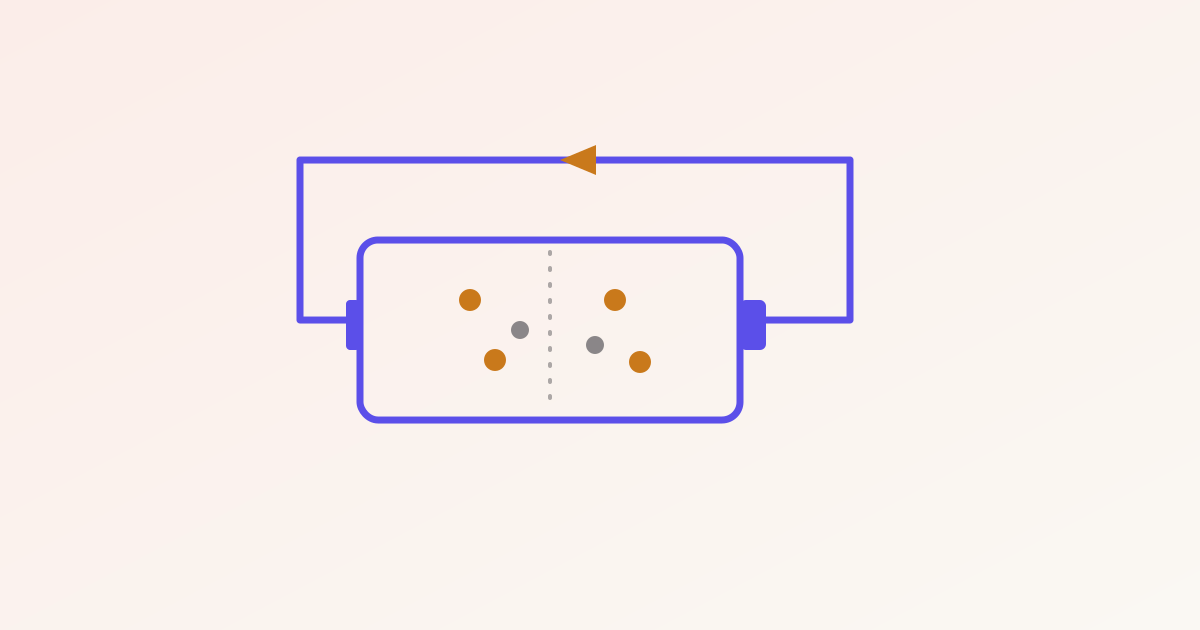
The Slow Chemistry Inside a Battery
A battery is two reactions kept apart, forced to trade electrons through your device. Discharge, recharge, and why every battery eventually dies — the chemistry made concrete.
- Chemistry
The garden
Living documents we keep tending, revising, and growing.
88 documents
A battery is two reactions kept apart, forced to trade electrons through your device. Discharge, recharge, and why every battery eventually dies — the chemistry made concrete.
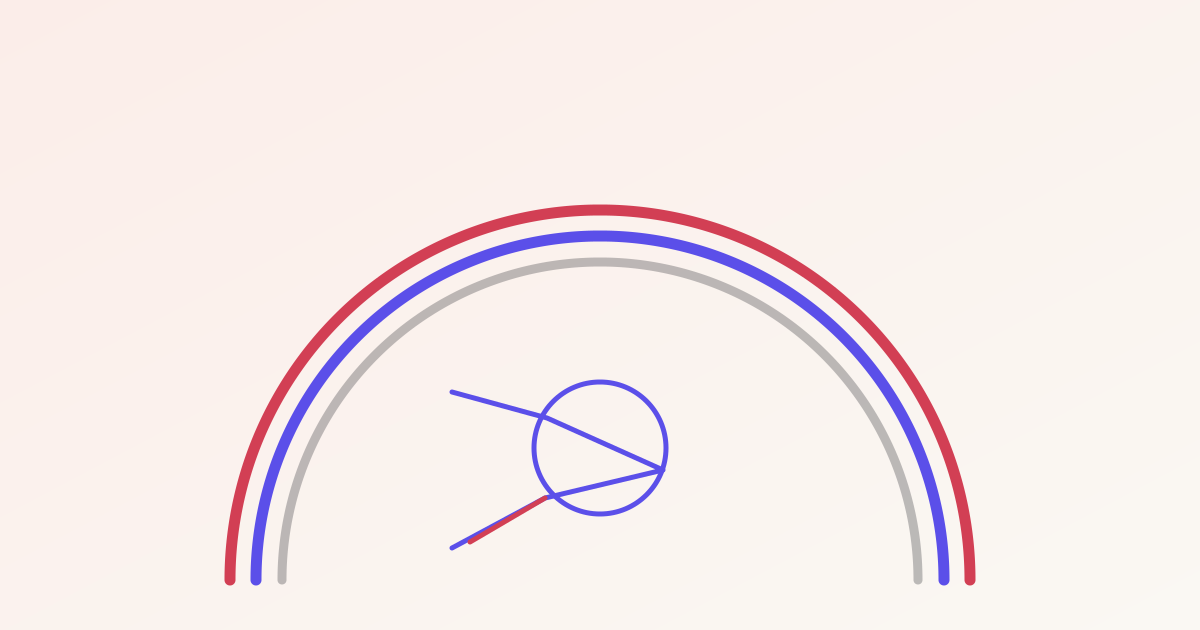
Every raindrop bends and bounces sunlight into a cone exactly 42 degrees wide. That single angle explains the arc, the order of the colors, and why you can never reach the end.
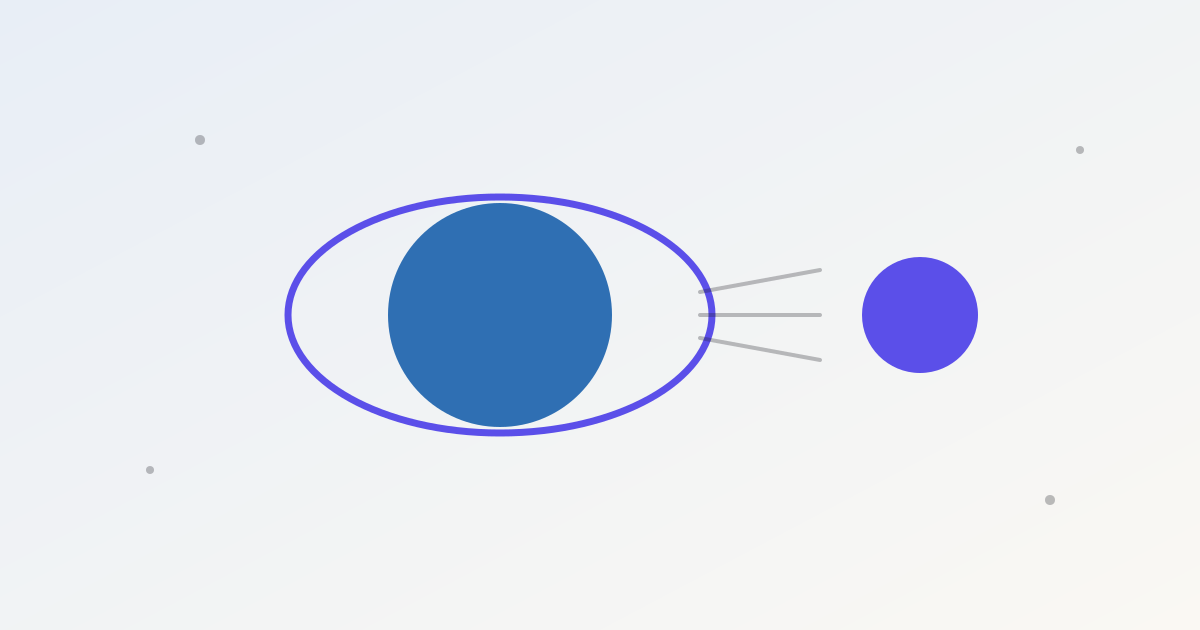
The Moon pulls the ocean toward it — so why is there also a high tide on the side of the Earth facing away from the Moon? The answer isn't the pull. It's the difference in the pull.

Two stars, one bright and one faint, and no way to tell near from far by looking. How astronomers built a chain of rulers from a thumb's-width of parallax to exploding stars — and where the chain has started to crack.

It swallows light and gives nothing back — so how can it have a temperature, and slowly boil away to nothing? The story of Hawking radiation, and the paradox that discovery left unsolved.
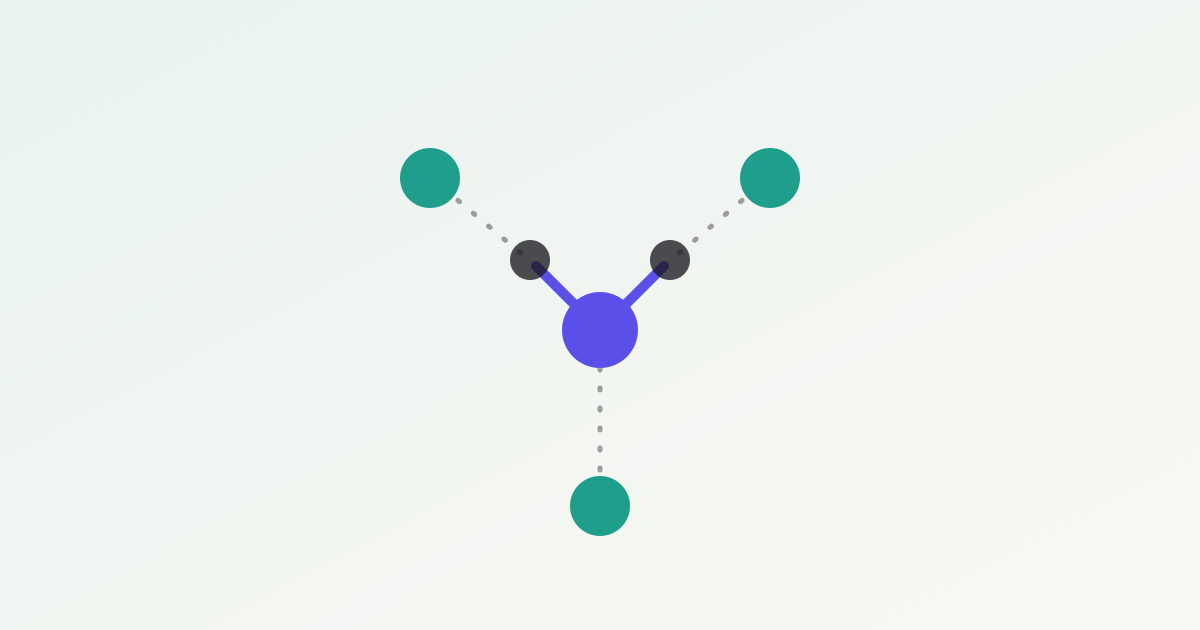
Ice floats, water resists temperature change, and it climbs up trees against gravity. Nearly every weird thing water does traces back to one feature: the hydrogen bond.
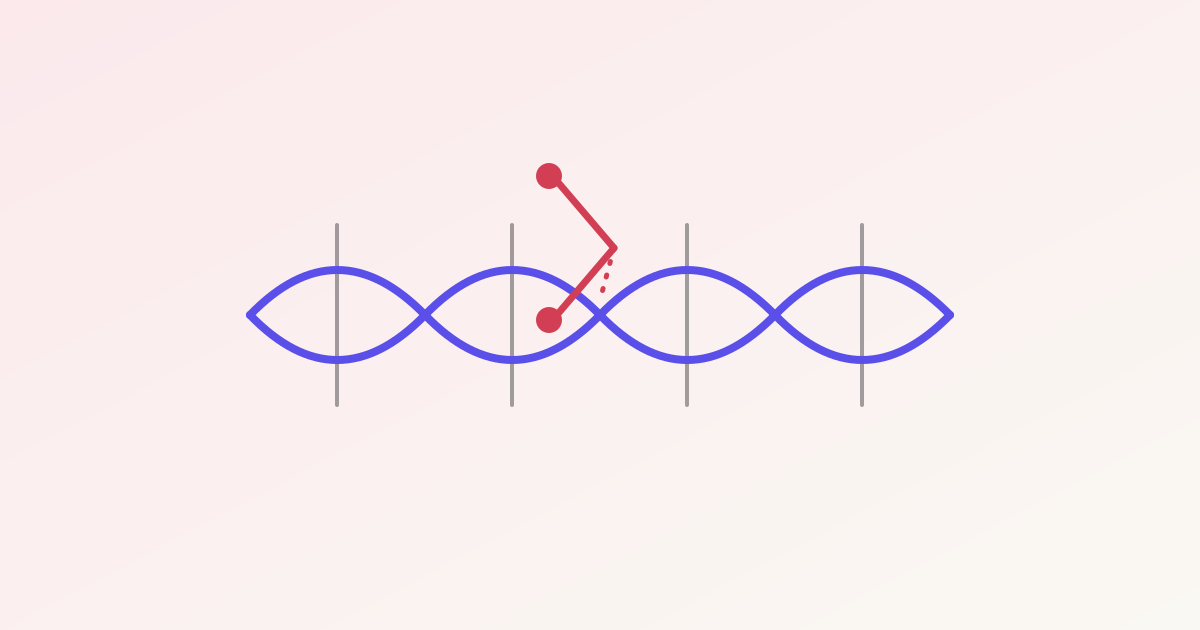
A bacterial immune system, repurposed: a guide molecule finds an exact sequence of DNA, a protein cuts it, and the cell's own repair machinery does the editing. Find-and-replace for life.
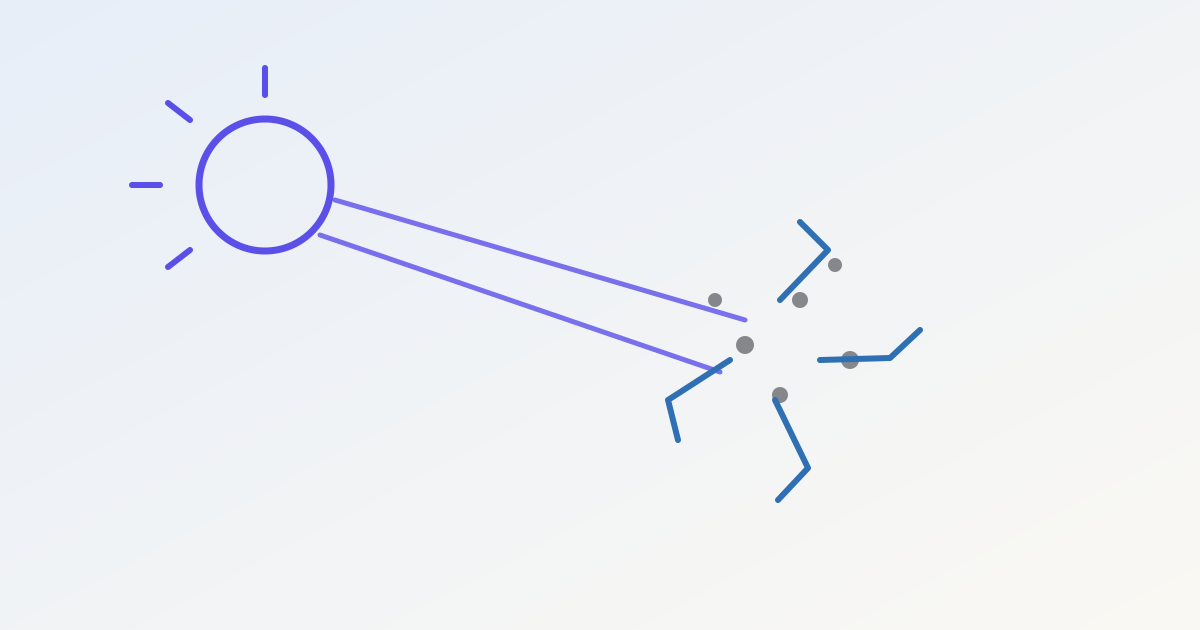
Air scatters blue light far more than red, so the daytime sky glows blue and the setting sun, seen through more air, turns red. The same physics, two times of day.
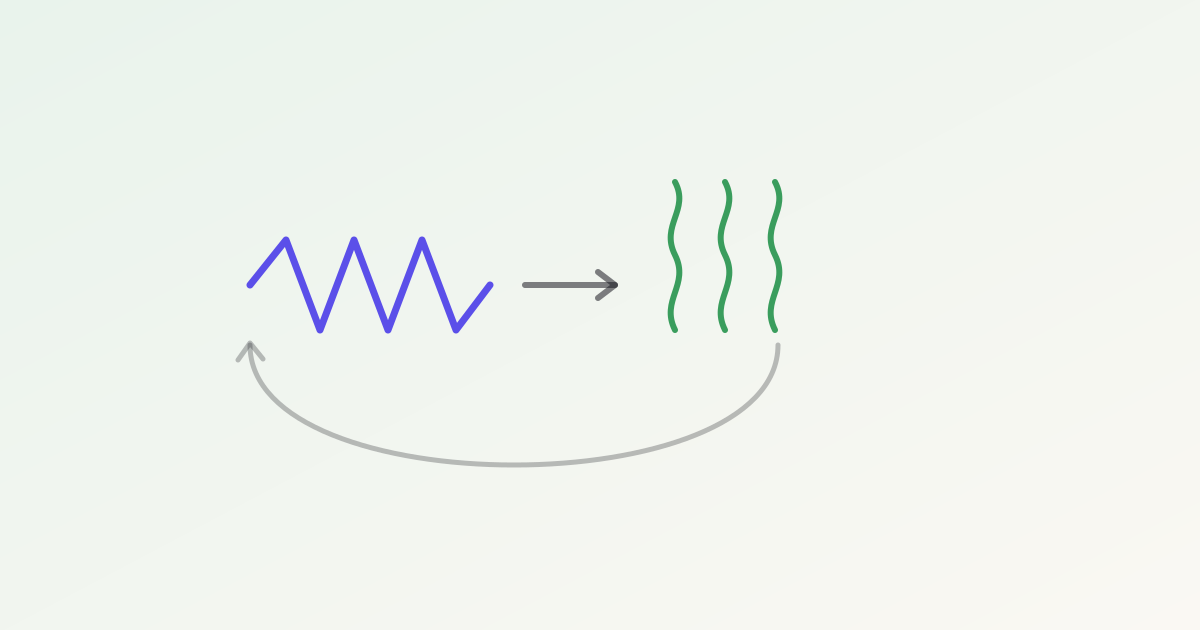
Energy is the one quantity the universe refuses to lose. Following it from a stretched spring to a warm room is the whole game — and it leads straight into entropy.
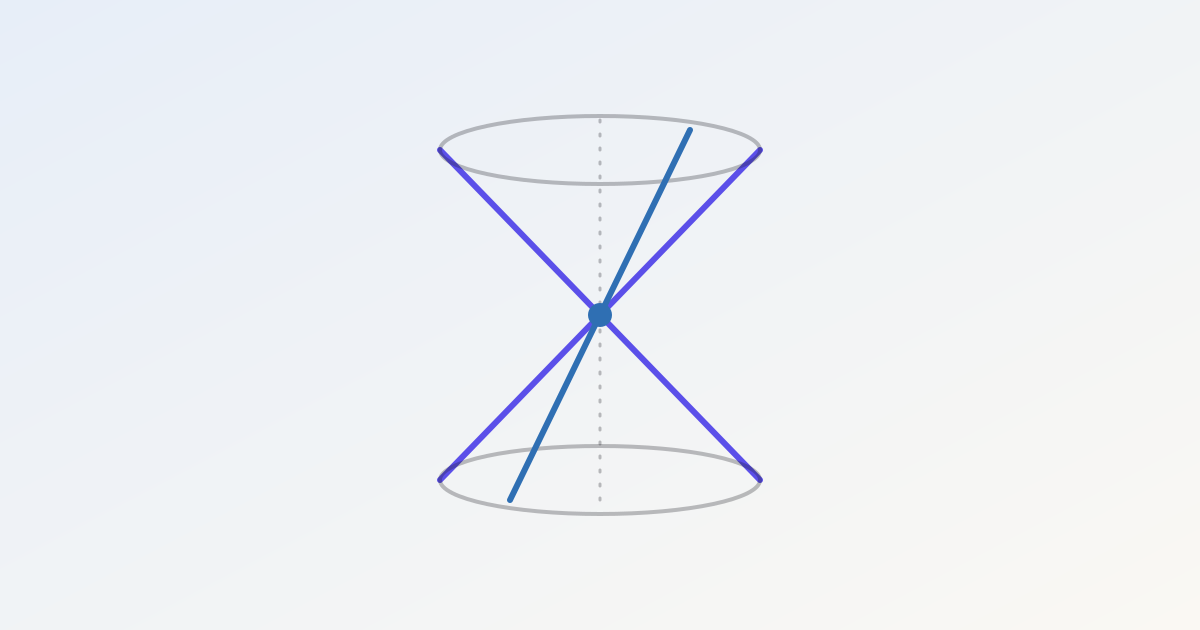
Start from a single stubborn fact — light's speed is the same for everyone — and watch time and distance bend to keep it true. No equations heavier than multiplication.
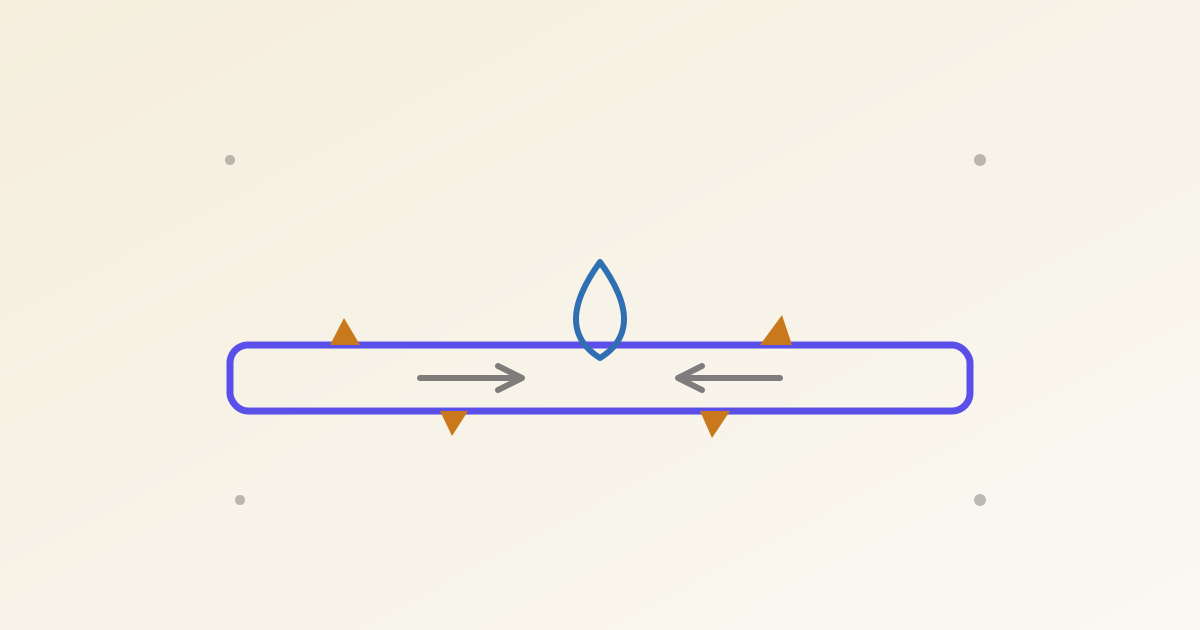
Leave a nail in the rain and it rots; leave a gold ring in a tomb for 3,000 years and it still gleams. Both are metals. Why does one corrode and the other never even tarnish?
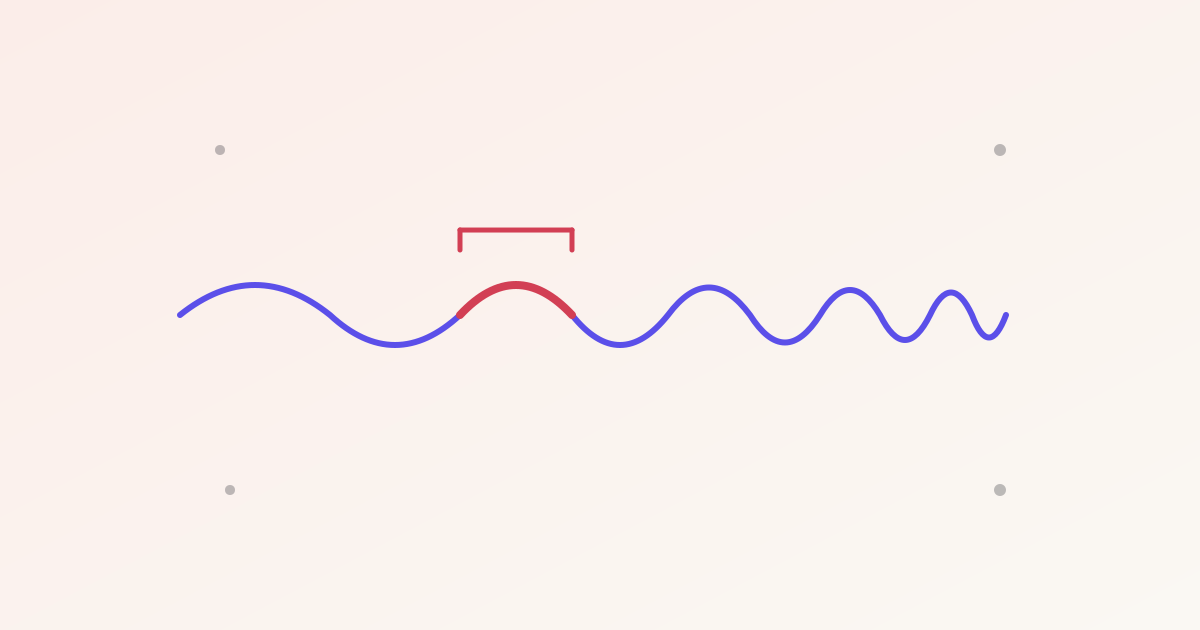
Every colour you can see is a thin slice of one vast family of waves — and most of the family is invisible, passing through the room right now. A field guide to the light you can't see.
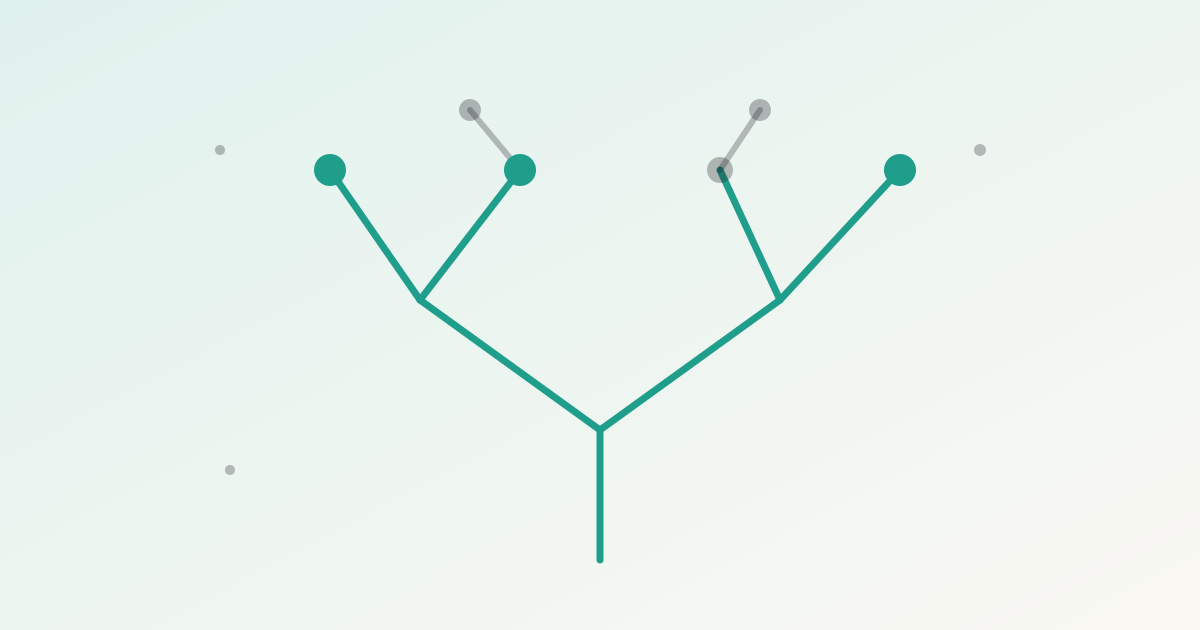
The most important idea in biology is also the most misquoted. Darwin's real theory is quieter, stranger, and far more powerful than 'survival of the fittest' ever suggested.
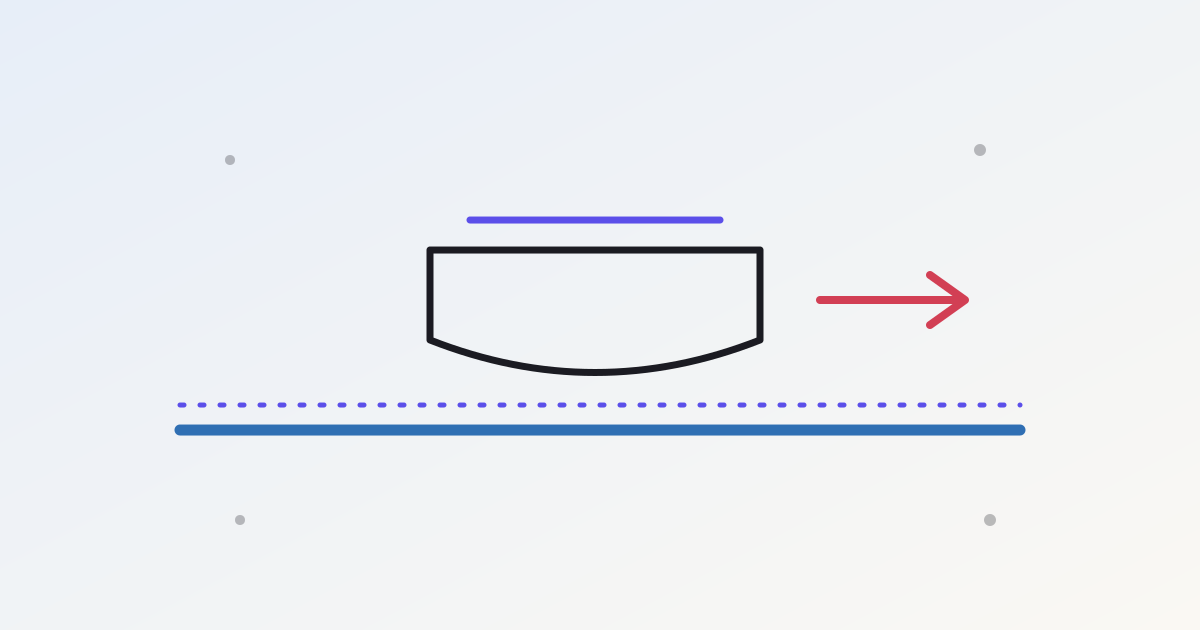
You can walk on stone, glass, dry metal. Freeze a sheet of water and suddenly your feet won't hold. What makes this one solid so treacherous — and why do scientists still argue about it?
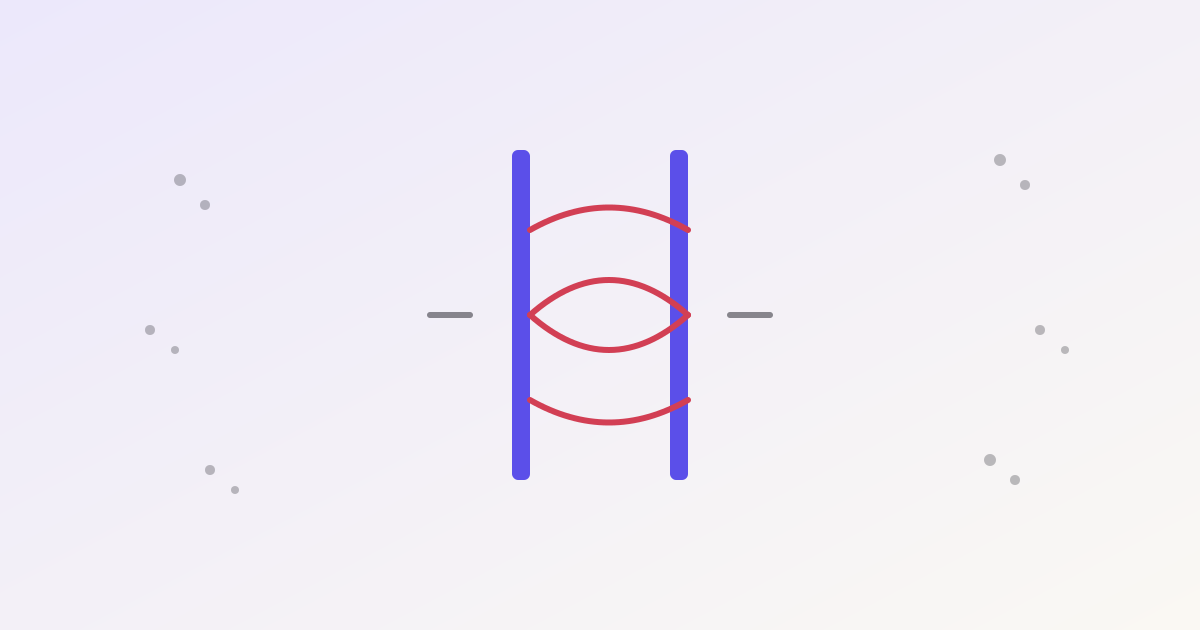
Pump out the air, the light, the heat. What's left is the vacuum — the most crowded, most restless nothing you'll ever fail to see, and home to the worst prediction in physics.
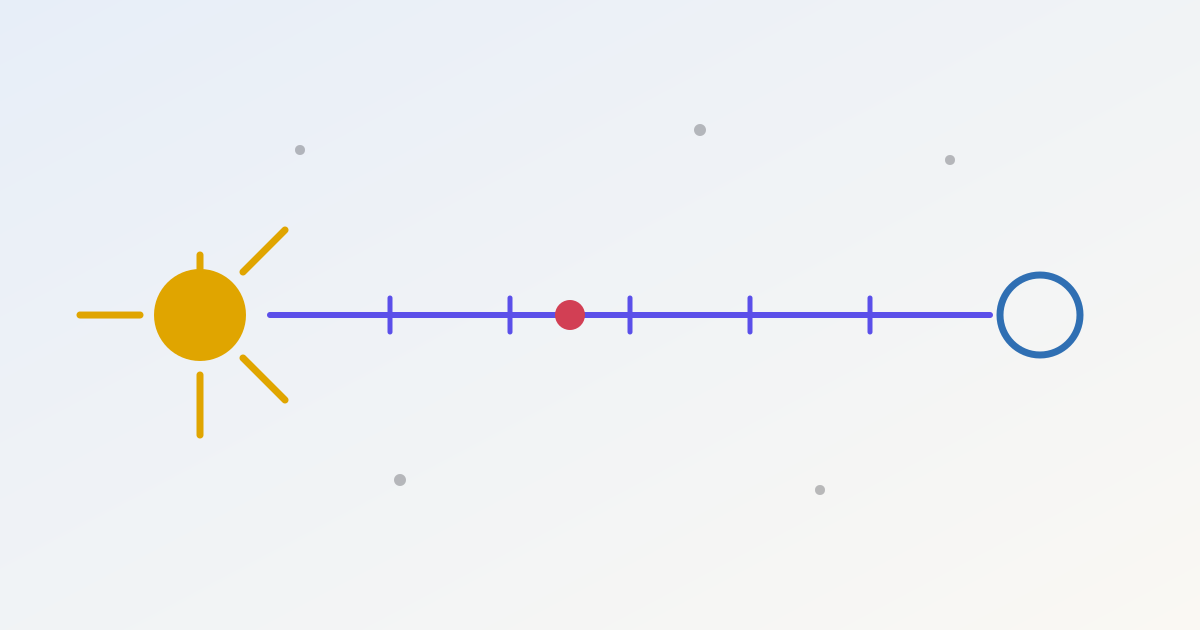
It has 'year' in the name, so it sounds like a span of time. It's a distance — and the reason astronomers measure the sky this way is the most poetic fact in the science.
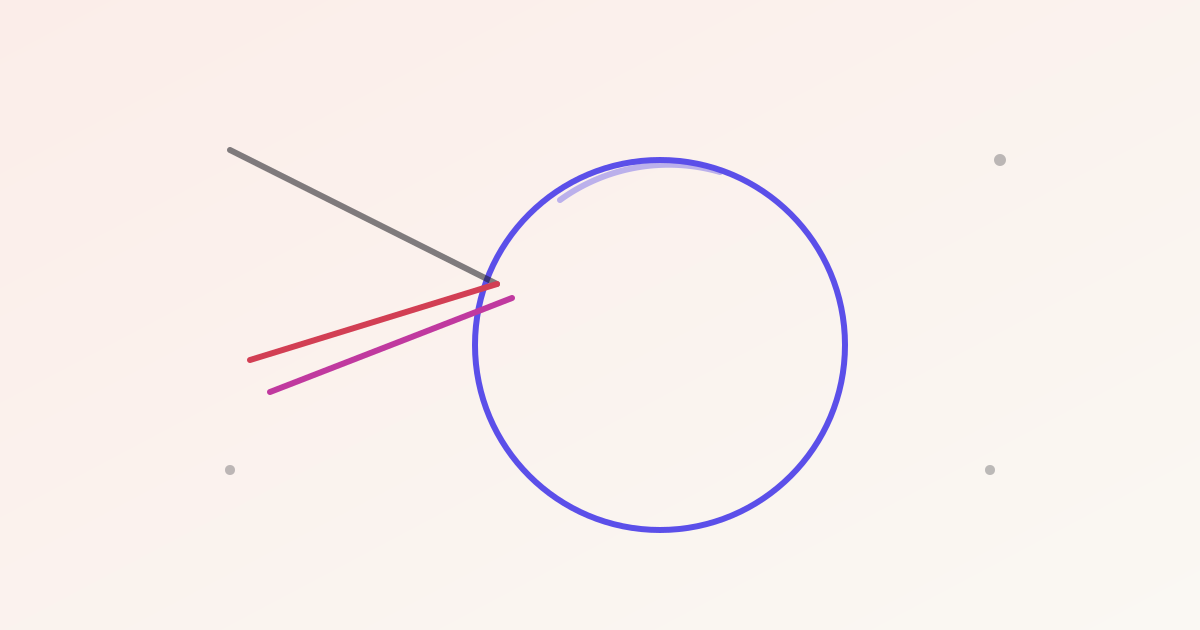
Soap is colourless and so is water, yet a bubble swirls with every colour there is — none of it painted on. The colours come from something stranger than a prism.
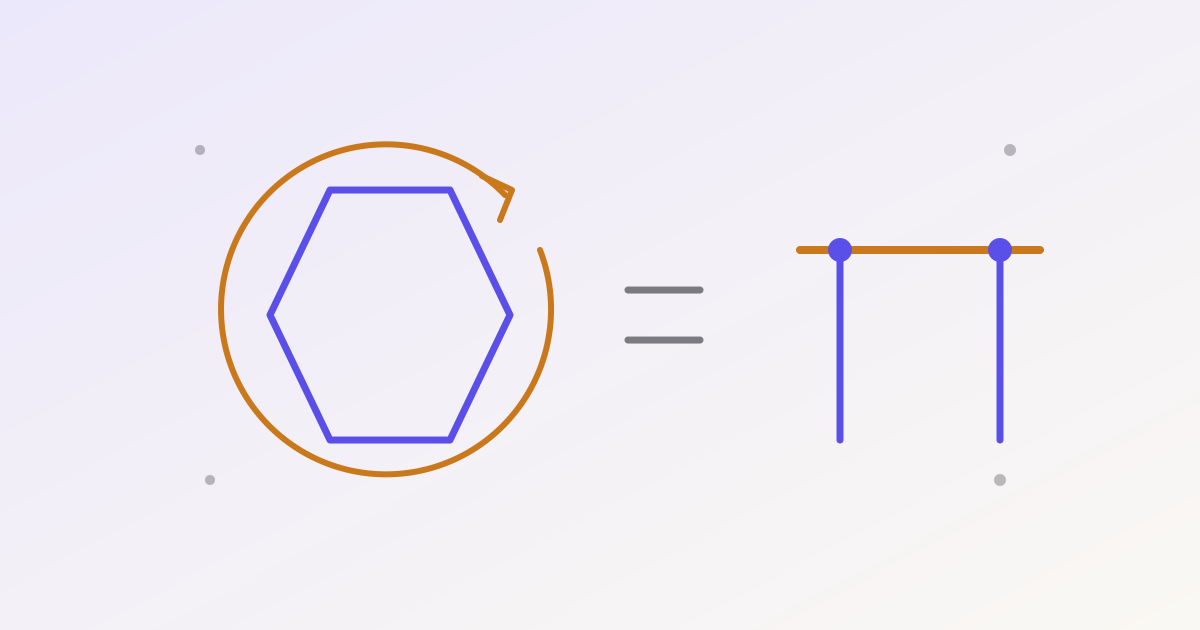
Why is energy conserved? Not luck, not a measured habit of the world. A mathematician barred from a paid job proved it's because the universe has no favourite moment.
A vaccine isn't medicine for when you're sick — it's a rehearsal you run while healthy. How the body learns an enemy's face in advance, and why some enemies keep changing it.
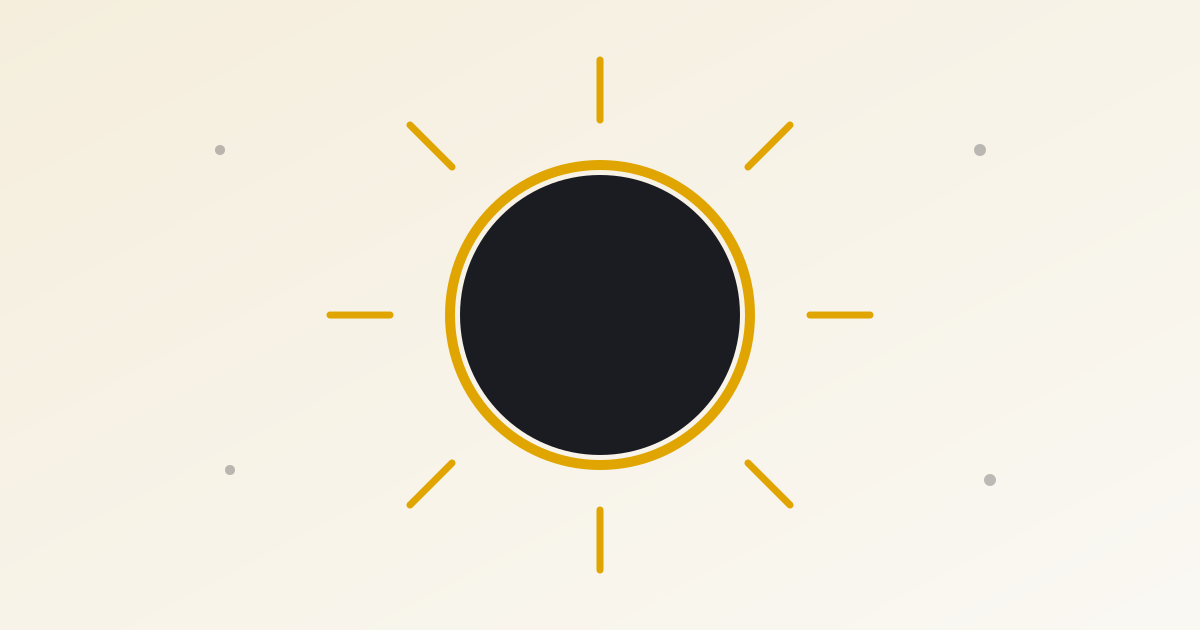
The Sun is 400 times wider than the Moon and 400 times farther away, so the two look the same size and one can hide the other exactly. Nothing requires this. It's a passing accident of where and when we live.

A steel spoon and a wooden one, side by side all day at the same temperature — yet the metal feels colder. Your hand isn't a thermometer. It's measuring something else entirely.
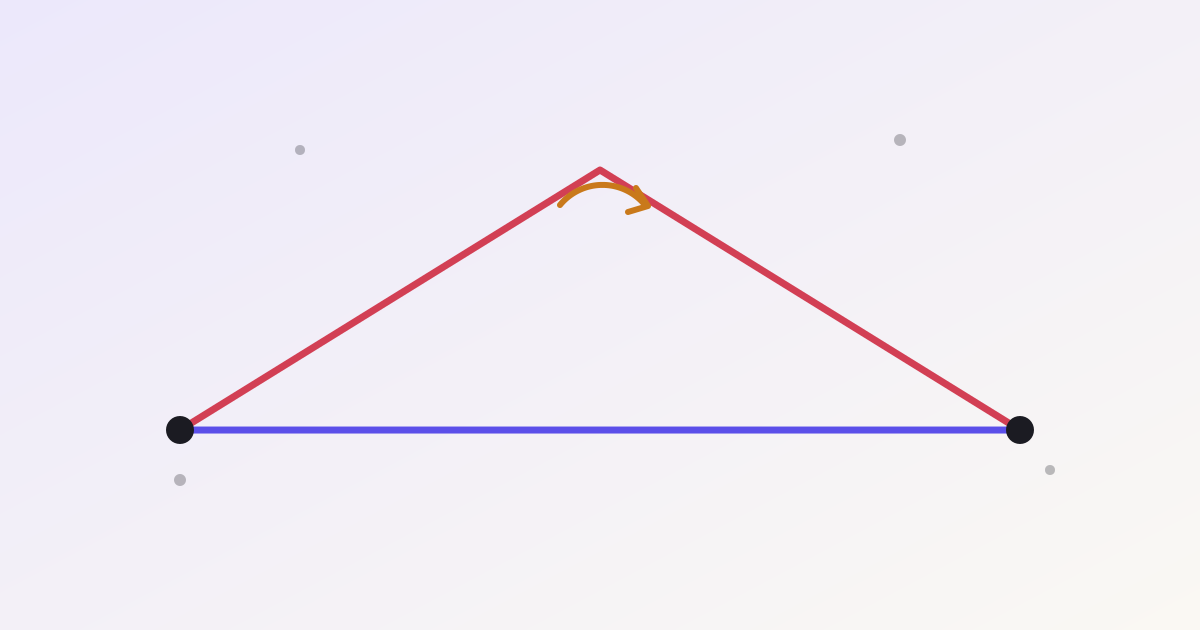
Send one twin to the stars at near light-speed and she comes home younger than the brother who stayed. The puzzle isn't that it happens — it's why it isn't a contradiction.
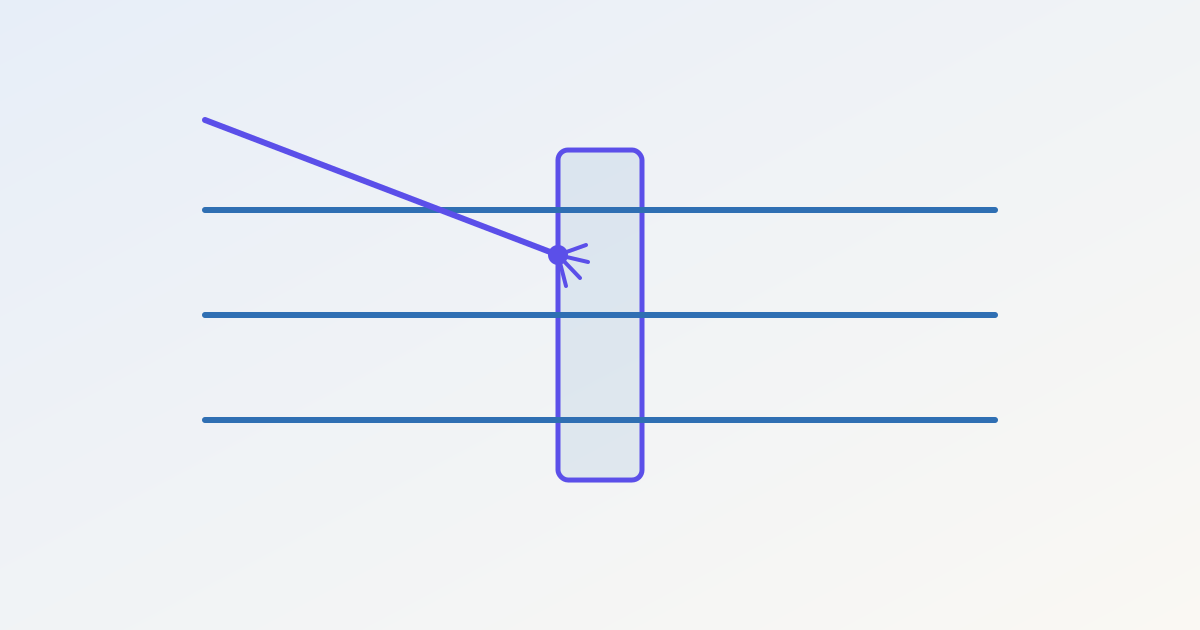
Glass is a dense solid, yet light crosses it untouched. Not because light finds the gaps — because visible light has no allowed energy rung to spend itself on, and so is never absorbed at all.
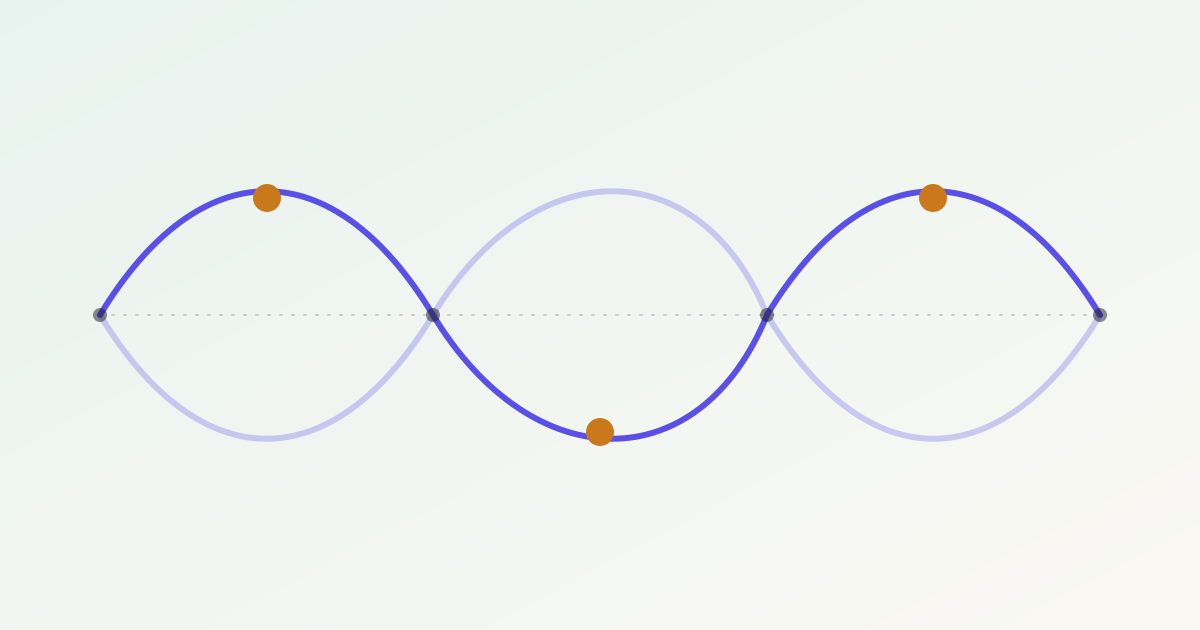
A genuinely doable kitchen experiment: melt chocolate in a microwave with the turntable off, measure the gaps between hot spots, and recover the speed of light to within a few percent. Full method, data, and error budget.
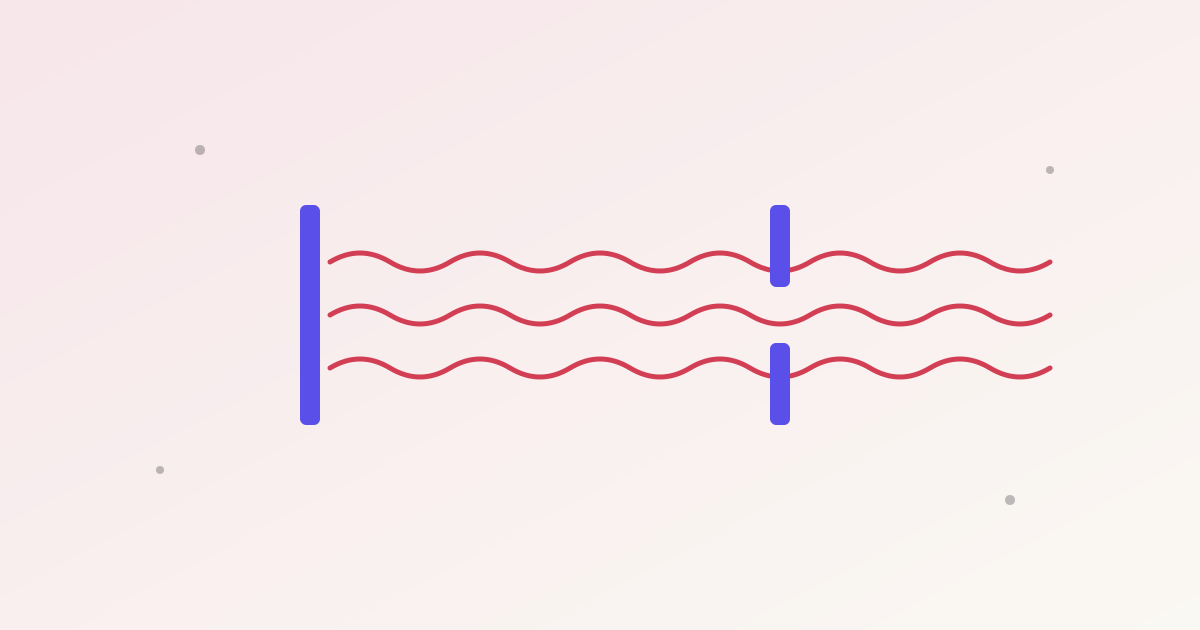
A laser isn't just a brighter, tidier flashlight. It's light doing something ordinary light never does — moving in perfect lockstep — and Einstein predicted the trick forty years before anyone built one.
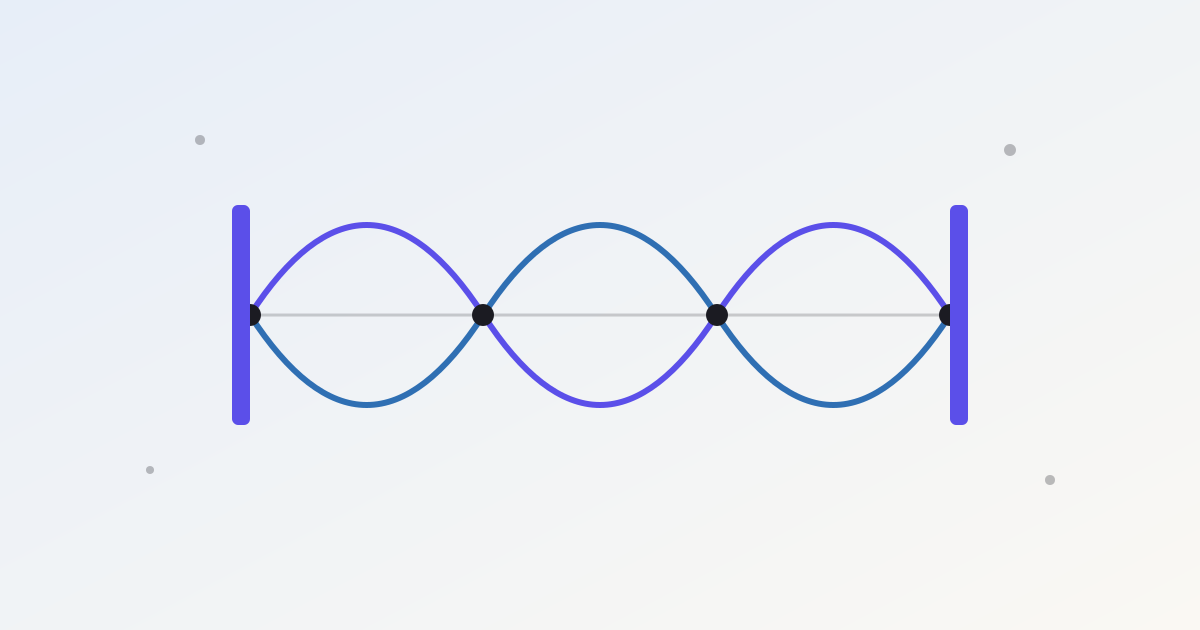
Push a swing at the right moment and it climbs on a whisper. The same trick tunes a radio, photographs your knee, and shatters a wine glass with a note — and it is not what wrecked the Tacoma Narrows Bridge.
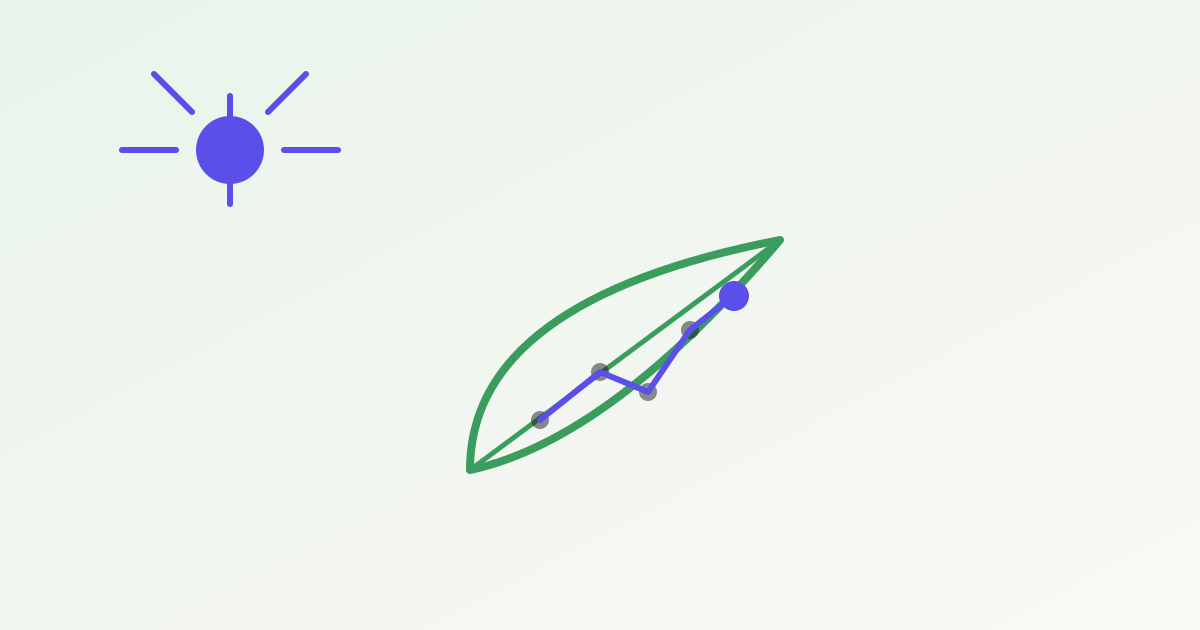
Plants move captured sunlight to the reaction center with near-perfect efficiency — possibly by letting the energy explore every path at once, quantum-style. A notebook on a contested, beautiful idea.

Every animal with a nervous system seems to sleep, it's costly and dangerous, and we still don't have one agreed answer for why. A working notebook of the leading hypotheses and where I currently lean.
We switch off a person's consciousness on purpose, millions of times a year, and switch it back on unharmed. The astonishing part: we still can't fully say how. A working notebook.
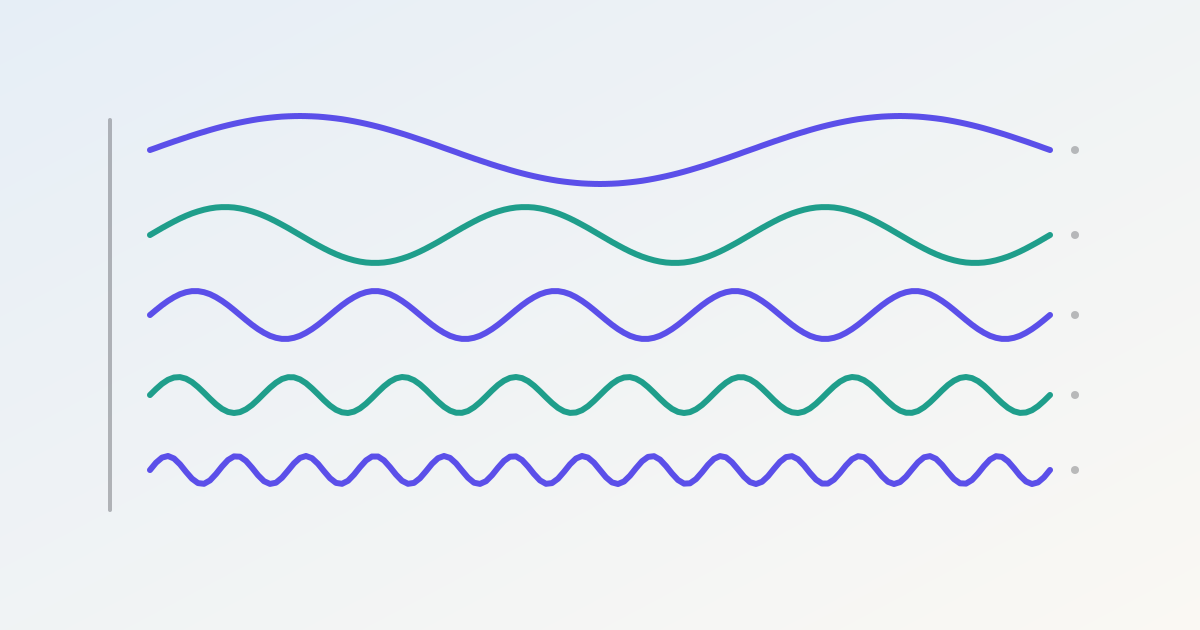
Delta, theta, alpha, beta, gamma — the brain hums at different frequencies depending on what it's doing. A guide to the rhythms an EEG picks up, and what each one means.
Your brain runs on about 20 watts — a dim lightbulb — whether you're solving equations or staring at a wall. The energy is real, but it barely moves when you think harder.
The idea is seductive: consciousness is mysterious, quantum mechanics is mysterious, so maybe one explains the other. Here's why physicists mostly say no — and what quantum biology really shows.
We can explain what the brain does — process, react, report. We cannot explain why any of it is accompanied by an inner experience. That gap has a name, and it may be the deepest question in science.
You don't play memories back like a video; you rebuild them from scratch, a little differently each time. What's stored isn't the scene but the strength of a few connections.
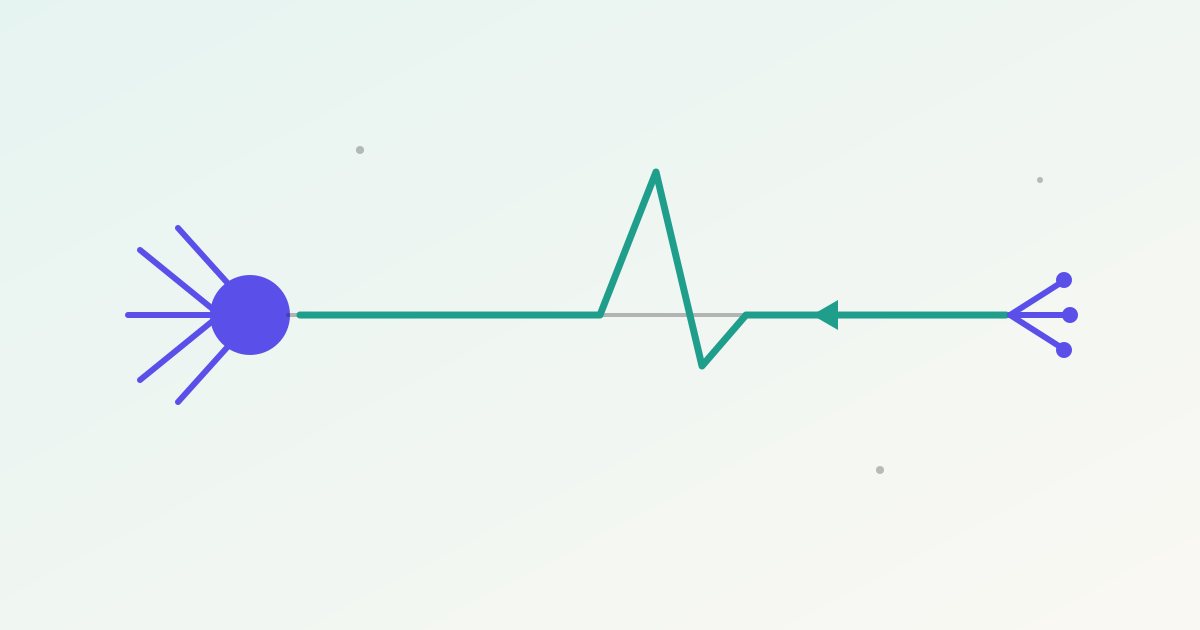
A thought, a flinch, a stubbed toe — all of it rides on a one-millisecond pulse. But the nerve impulse isn't electricity in a wire; it's a wave of salt, and it moves a million times slower.

The blocks, the gap in the middle, the two rows exiled to the bottom — none of it is arbitrary. The table's shape is a portrait of how electrons stack inside atoms.
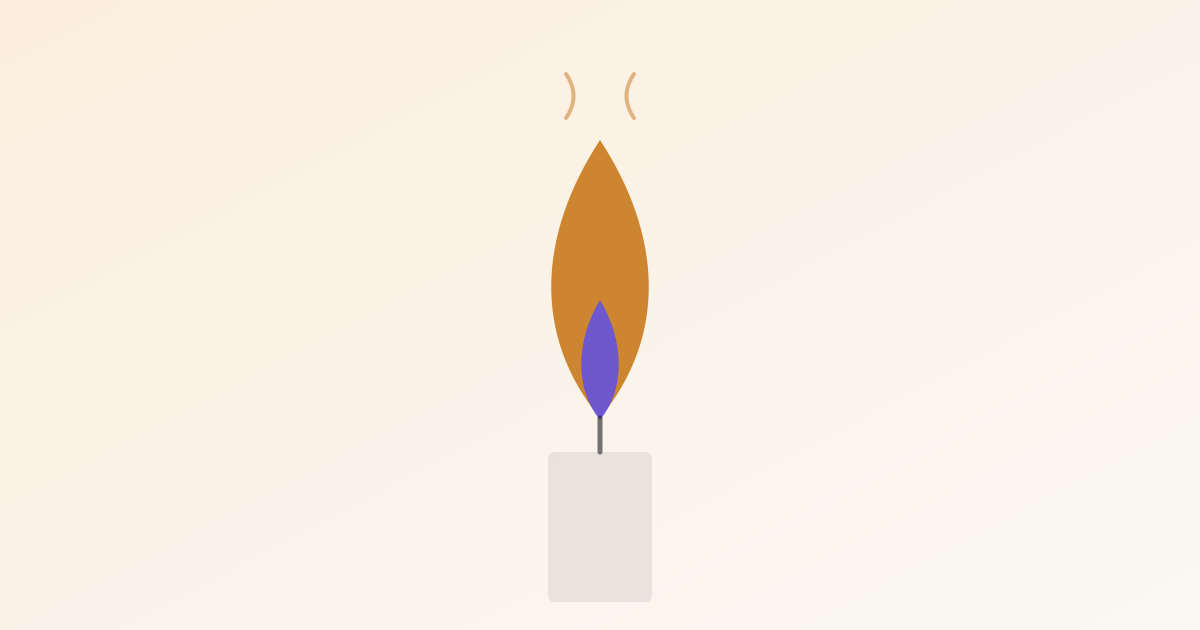
A candle flame looks like the most ordinary thing in the world and is one of the strangest. Not a substance, not quite glowing gas — a self-feeding chemical reaction you can hold a match to.
Atoms don't 'want' anything, and breaking a bond never releases energy — the two things everyone learns about chemical bonds are both backwards. A field guide to the handful of ways electrons actually hold the world together.
Cool certain materials enough and electrical resistance doesn't just shrink — it hits exactly zero, and magnets float. A quantum effect you can watch with your eyes.
Atoms are almost entirely empty space, so what actually holds you up? Not what you'd guess — and it's the same quantum rule that keeps a dead star from collapsing.
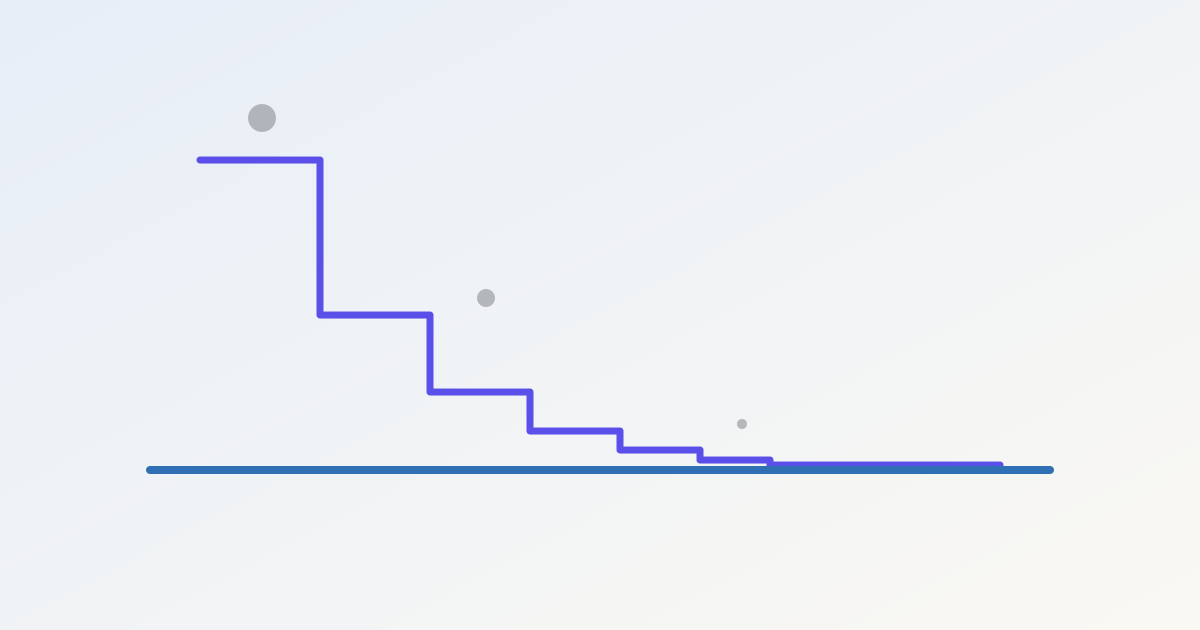
Absolute zero is where motion would stop — and the third law of thermodynamics says you can approach it forever without reaching it. The strange physics of the very, very cold.
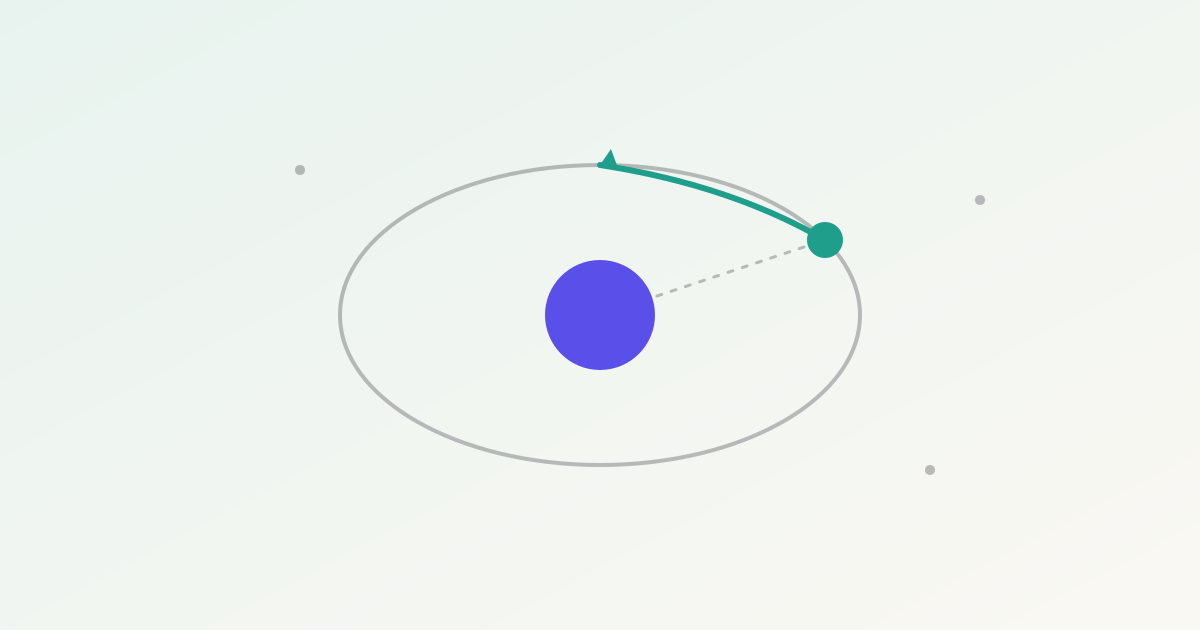
You can't put Jupiter on a scale, yet we know its mass to many digits. The trick: watch how long its moons take to circle. Gravity does the weighing for you.
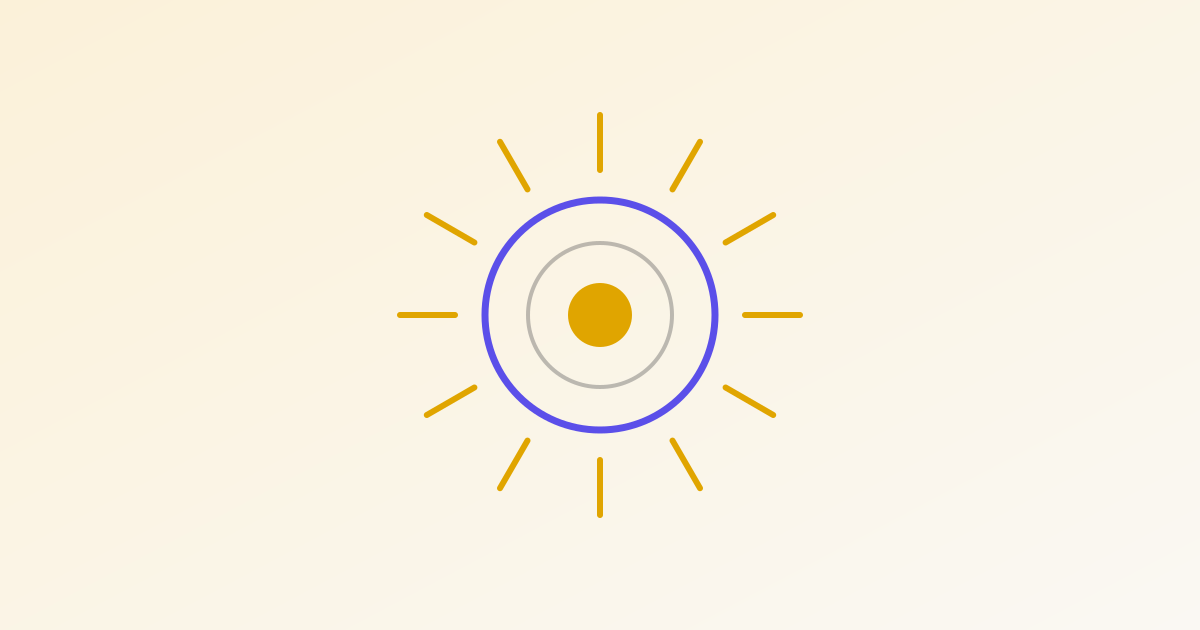
Four hydrogen nuclei become one helium nucleus, a sliver of mass vanishes as light, and a photon takes ten thousand years to claw its way out. The Sun, explained from the core outward.
The Big Bang made hydrogen, helium, and almost nothing else. Every heavier atom in your body — the carbon, the calcium, the iron, the gold — was built later, inside stars and the violence of their deaths.

Blue stars are scorching, red stars are cool — the opposite of the kitchen tap. The color of a star is a thermometer you can read with your naked eye, and it's the same physics as a glowing coal.

Three states of matter is what school teaches. There are more — and the single most common state in the universe is one you were probably never told about.

Gravity reaches the Moon and pulls on it hard — so why has it never dropped out of the sky? The answer is that it is falling, all the time. It just keeps missing.

For decades astronomers assumed the Sun was built of much the same elements as the Earth. A twenty-five-year-old's 1925 thesis proved it is almost entirely hydrogen — and she was pressured to call her own result wrong.
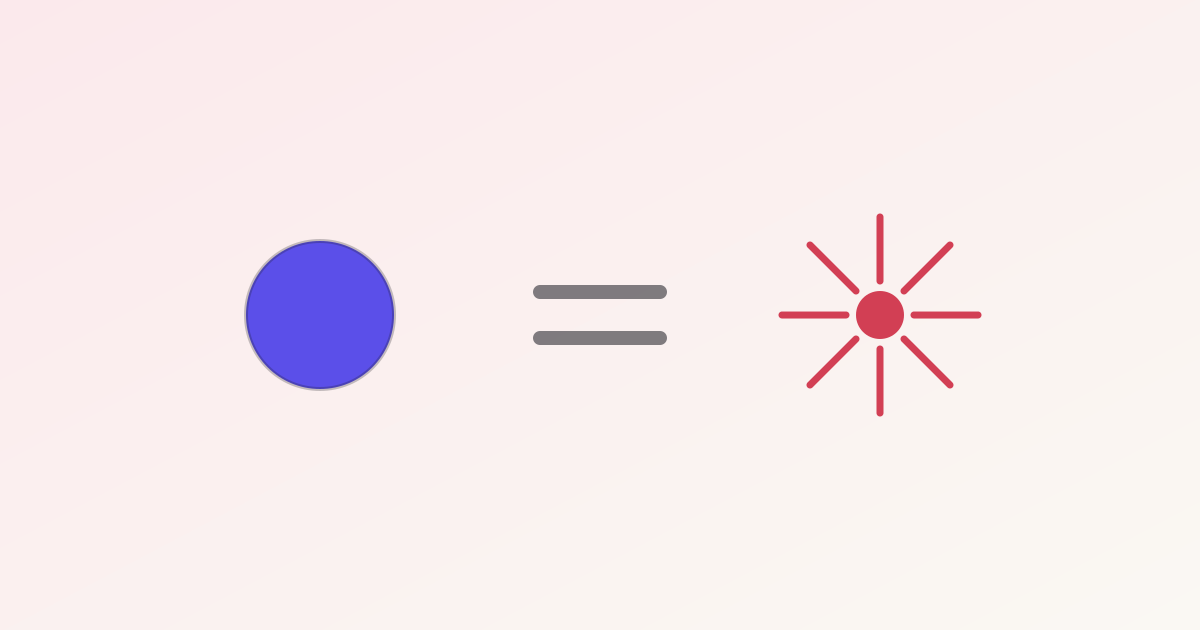
The famous equation isn't about bombs or speed. It says mass is a kind of frozen energy, and the exchange rate — c² — is enormous. What that buys you, and what it doesn't.
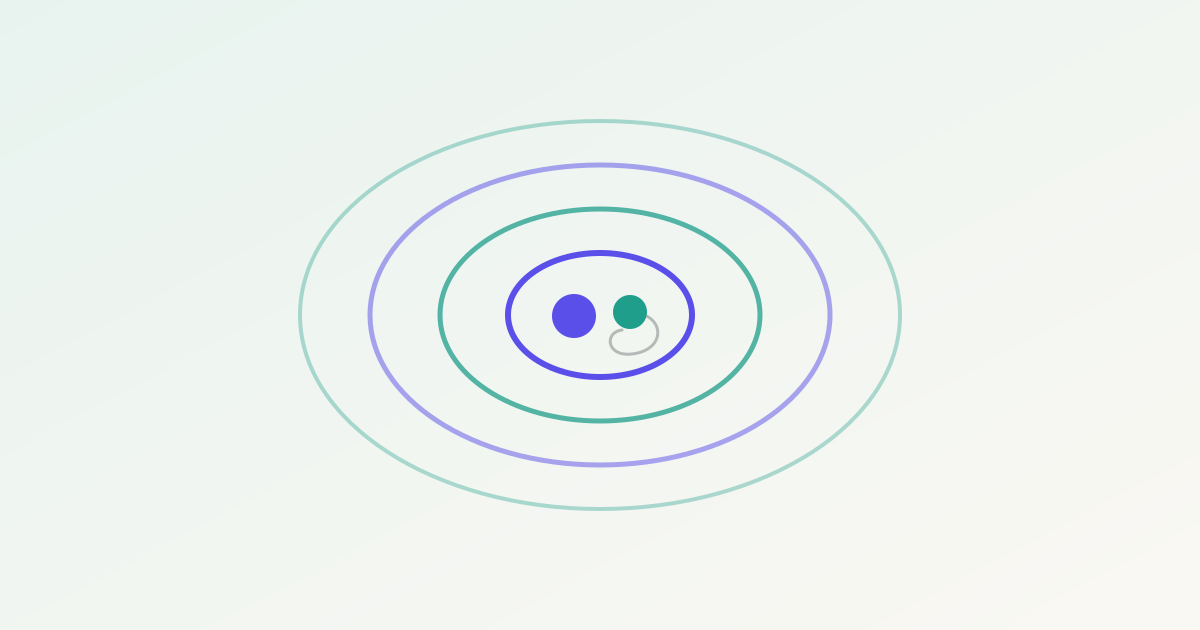
When two black holes merge, they ring spacetime like a bell. LIGO measures that ringing as a wobble thousands of times smaller than a proton. How we hear the universe's loudest silent events.
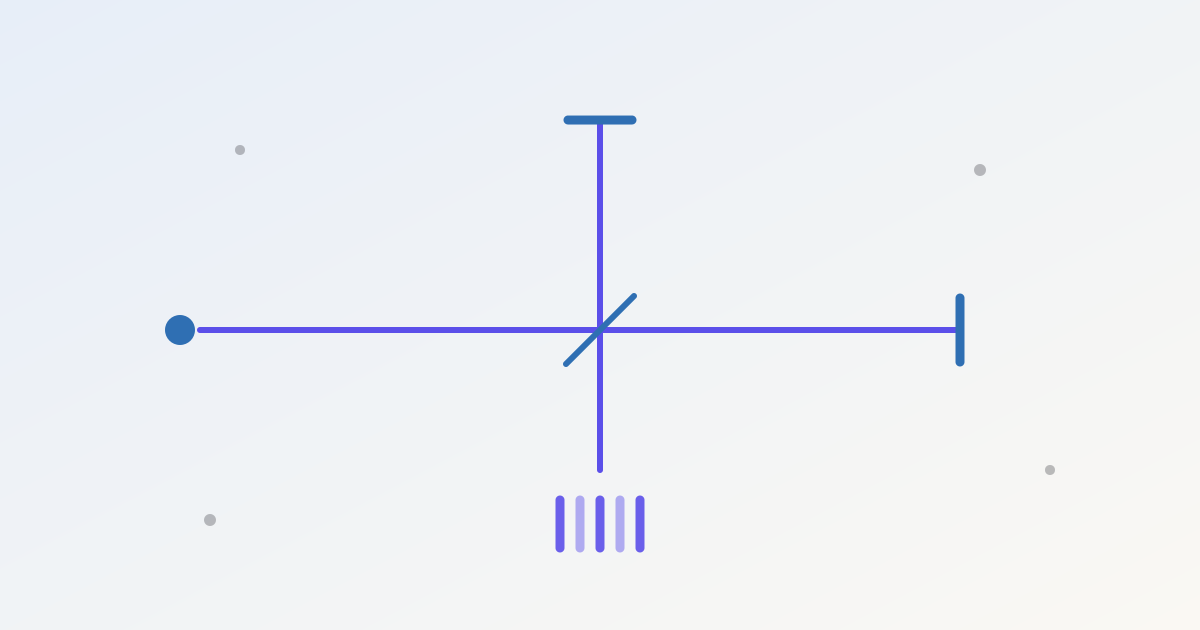
In 1887 two Americans built the most precise instrument on Earth to catch the wind of the aether — and found nothing at all. The nothing broke physics, and a century later the same design heard two black holes collide.
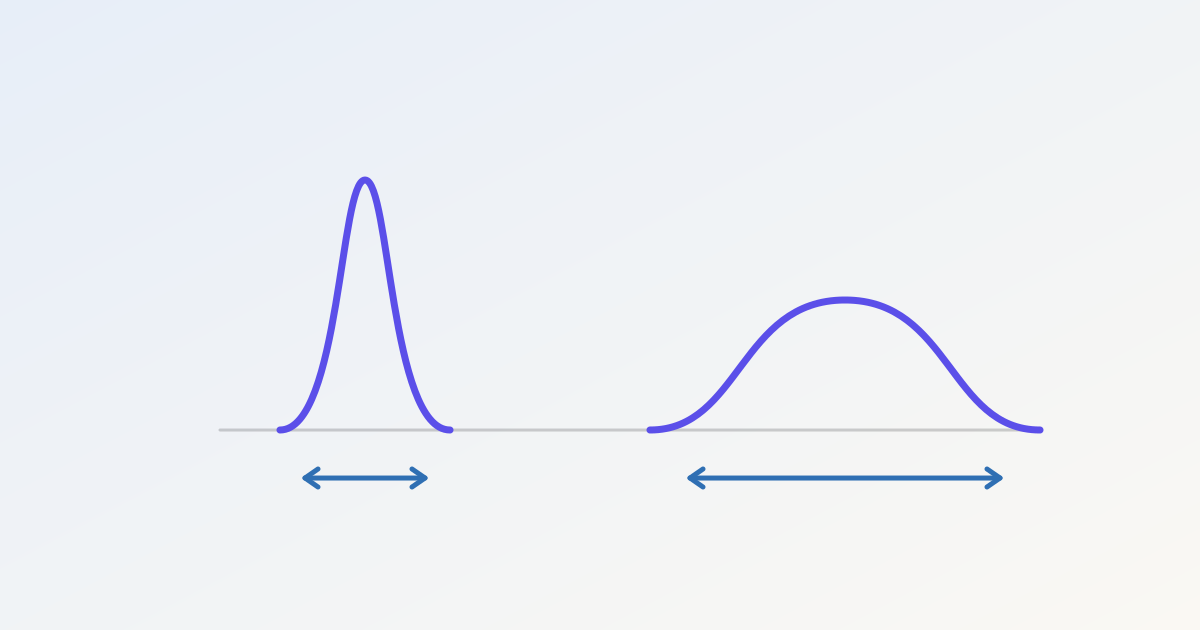
Heisenberg's principle isn't that measuring disturbs things. It's that 'a definite position' and 'a definite momentum' can't both exist at once — a fact baked into anything wavelike.
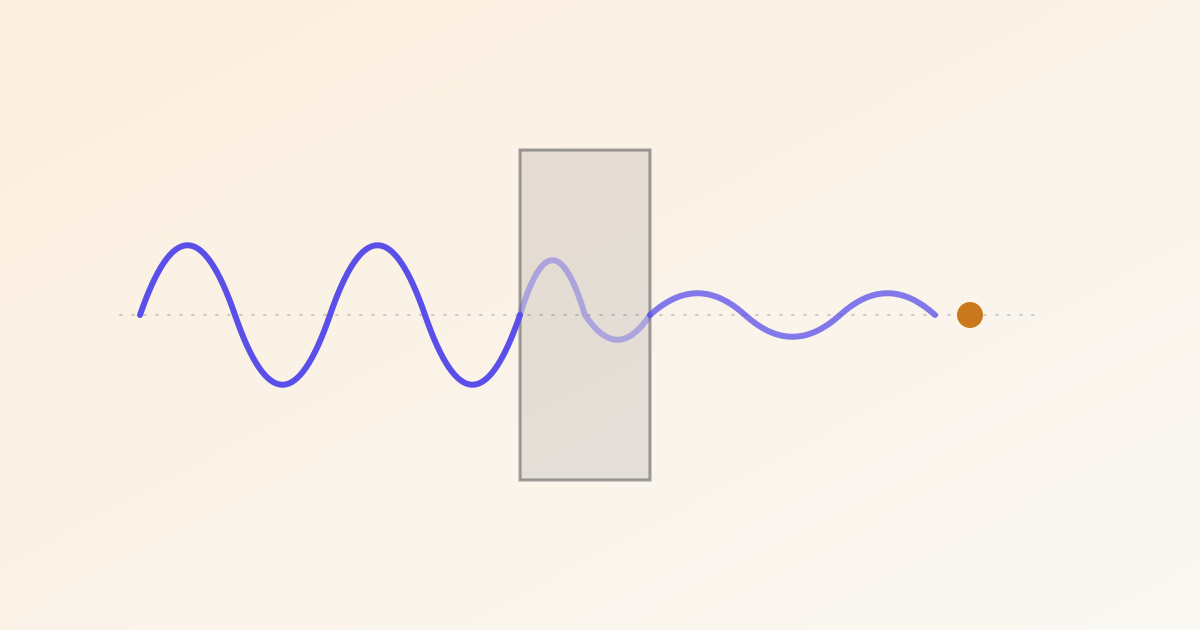
A particle without enough energy to climb a barrier sometimes appears on the other side anyway. Improbable, relentless, and quietly responsible for sunlight and flash memory.
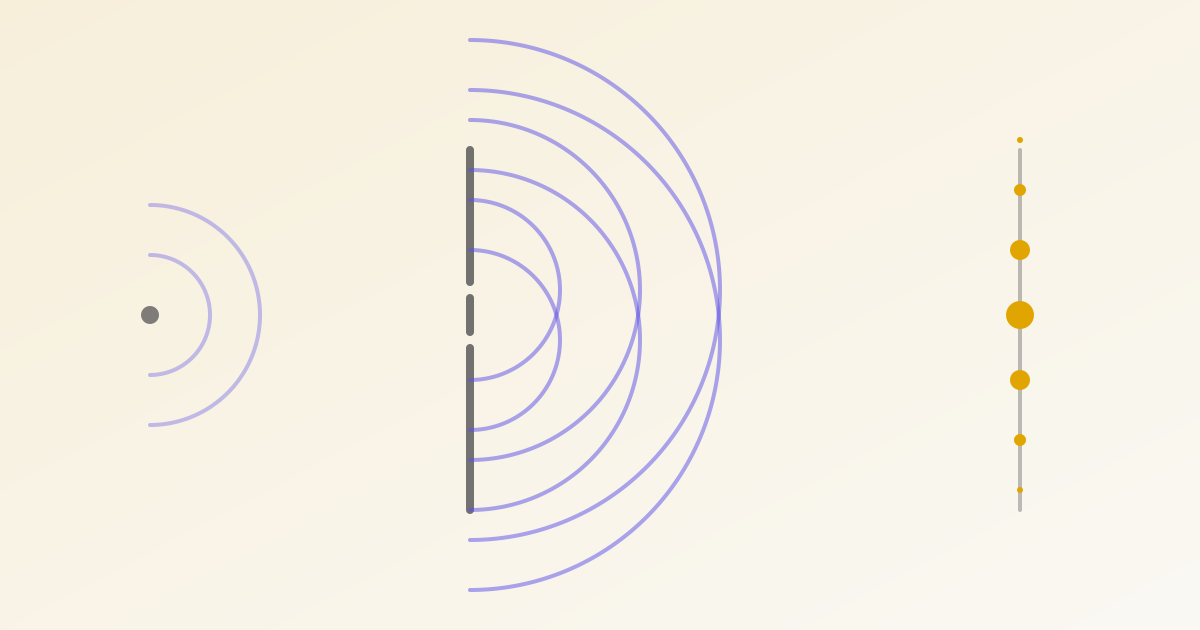
Fire electrons one by one at two slits and an interference pattern still appears — as if each electron passes through both. The experiment Feynman called the heart of quantum mechanics.
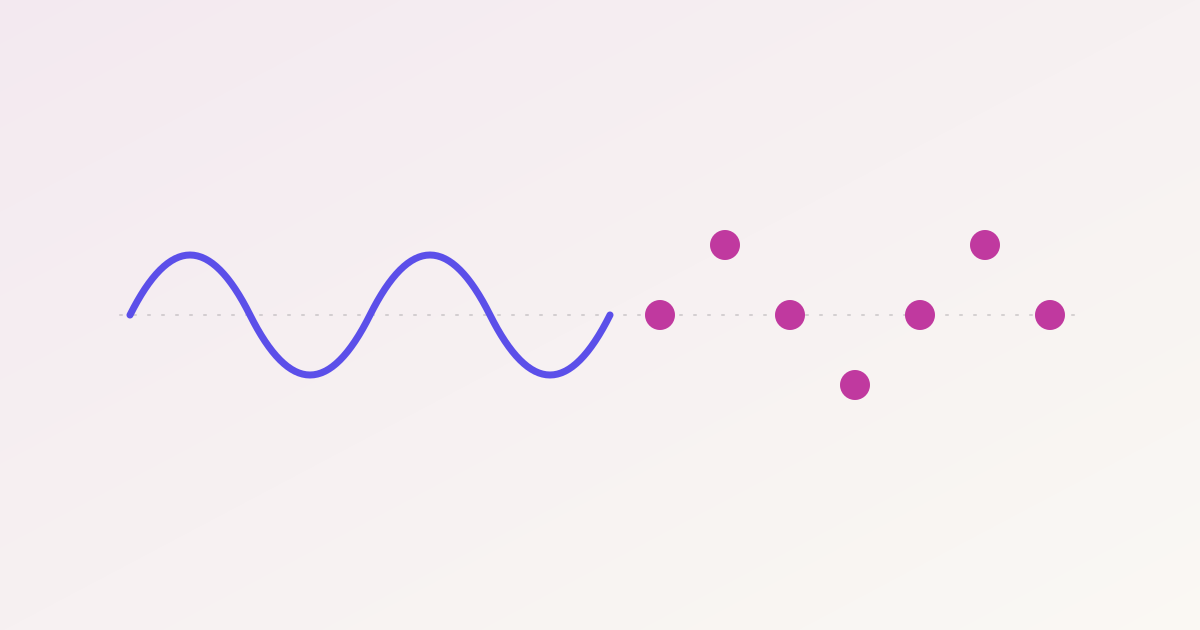
Light behaves like a wave until you ask it to behave like a particle, and matter returns the favor. Duality isn't a paradox so much as a warning that our two words are too small.
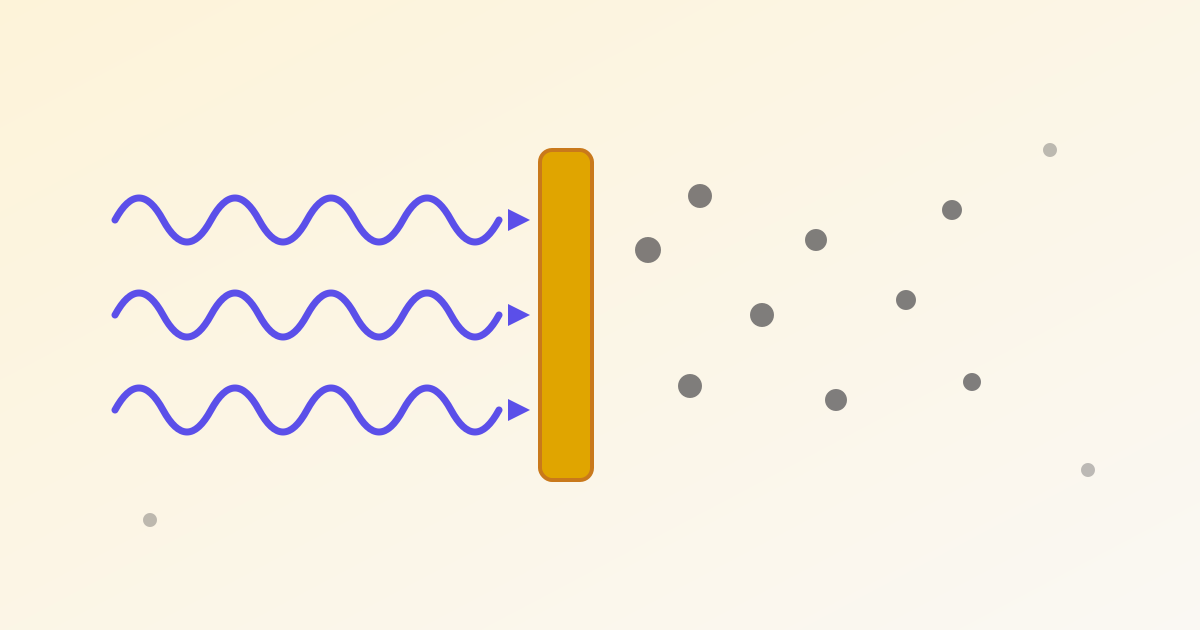
Not relativity — a humble experiment about light knocking electrons out of metal. It forced physics to accept that light comes in particles, and it explains the solar panel on your roof.
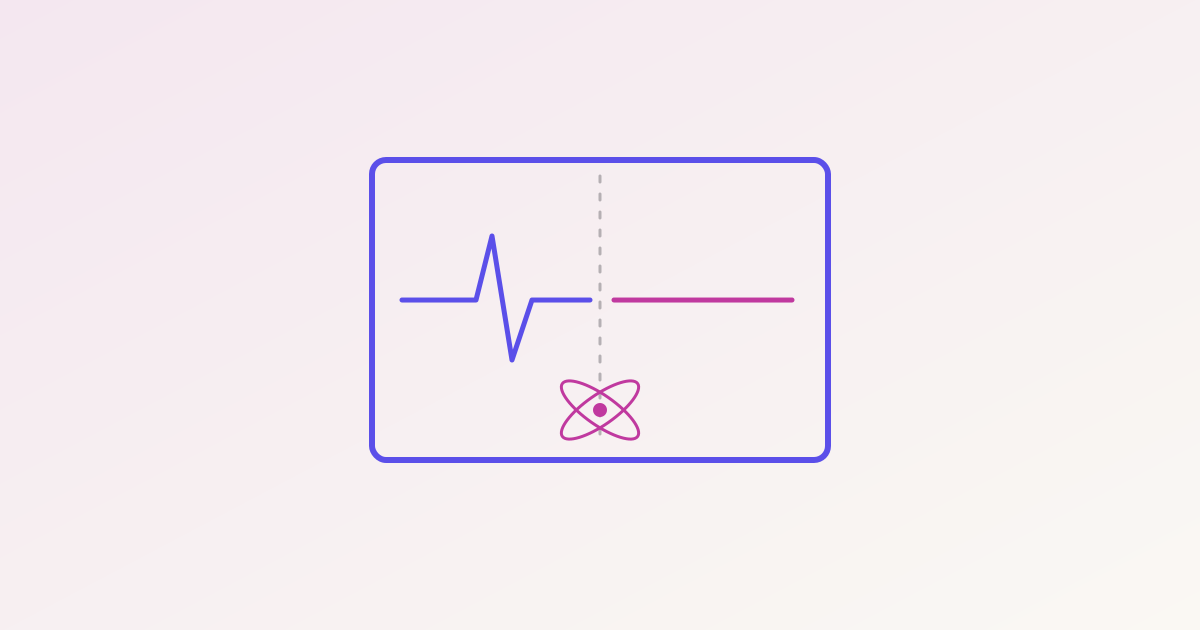
The famous cat wasn't a celebration of quantum weirdness — it was a physicist's sarcastic attempt to show the theory couldn't be taken literally. What the thought experiment was really arguing.
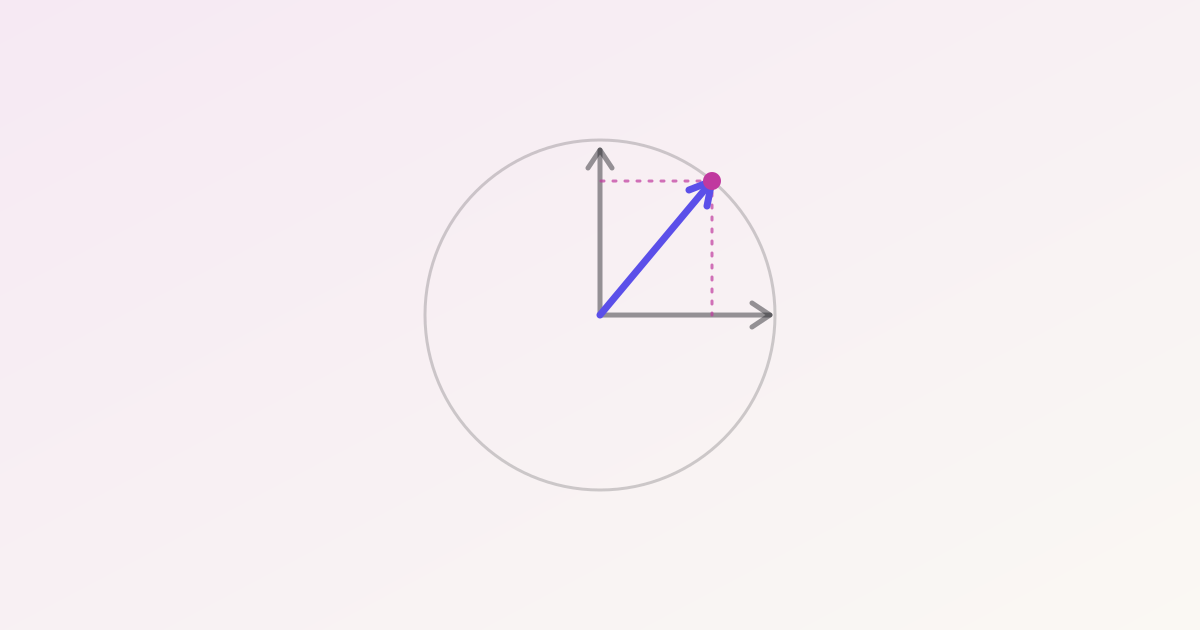
A quantum system can be in two states at once — but 'at once' doesn't mean what the headlines imply. What superposition is, and what it definitely isn't.
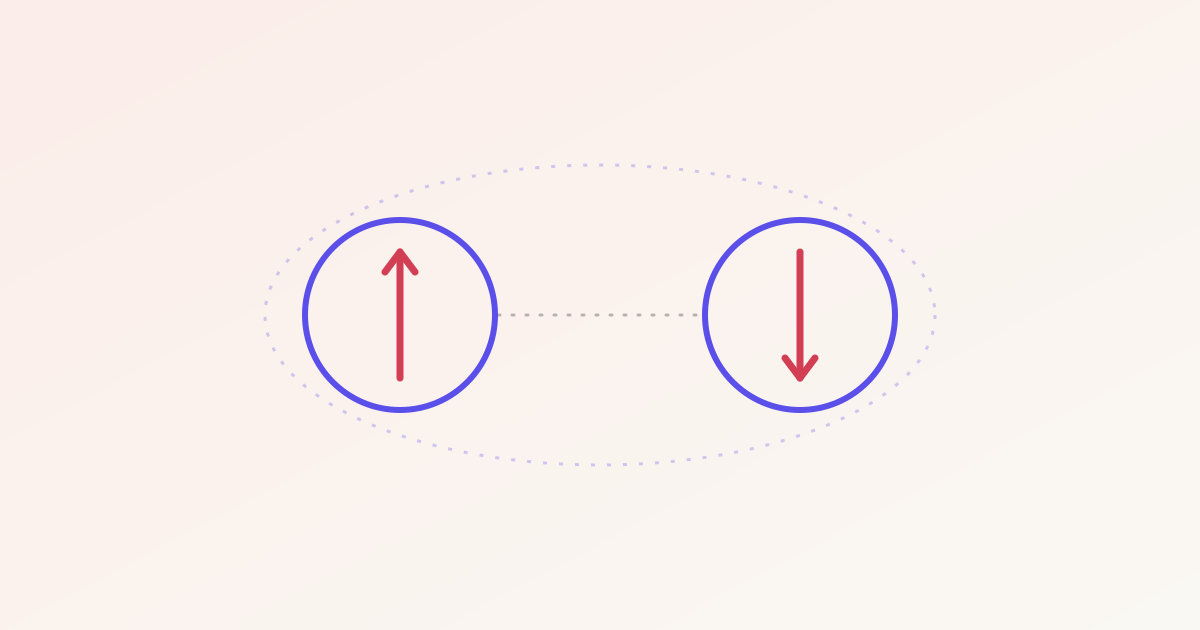
Two particles share a fate across any distance — and yet you cannot use it to send a single bit faster than light. Why both halves of that sentence are true.
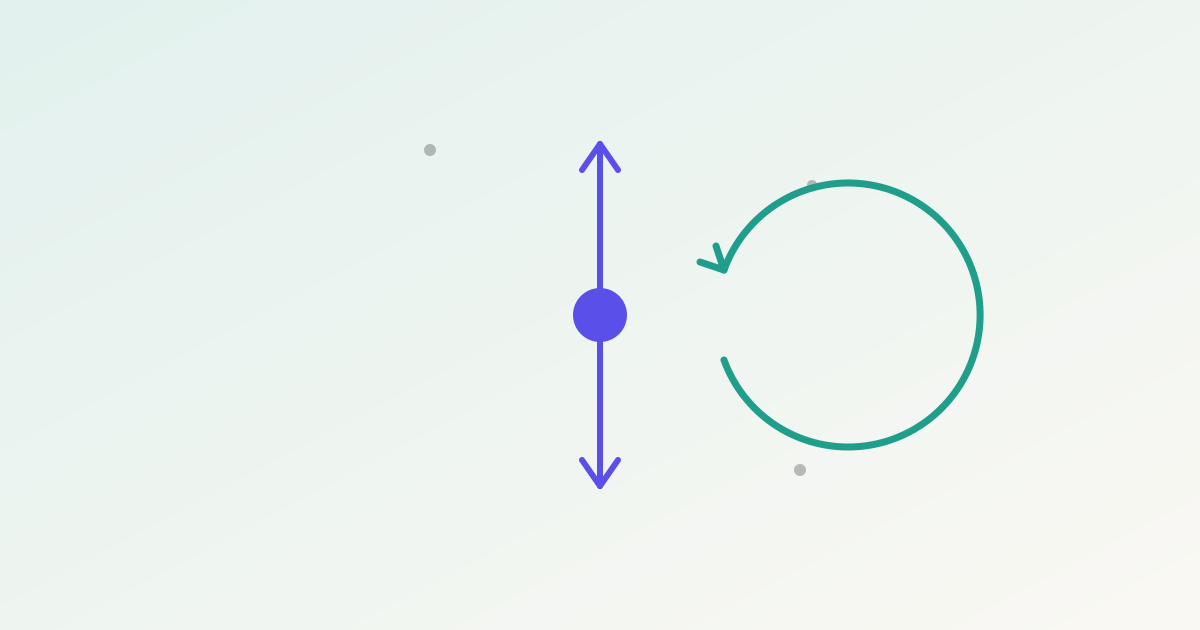
Every electron carries a fixed dose of angular momentum called spin — yet it isn't turning, and it never was. Where the name came from, and why the thing it names runs the periodic table.
Galaxies spin too fast to hold together with the matter we can see. Either there's a vast amount of invisible stuff, or gravity itself is wrong. A notebook on the leading suspects.
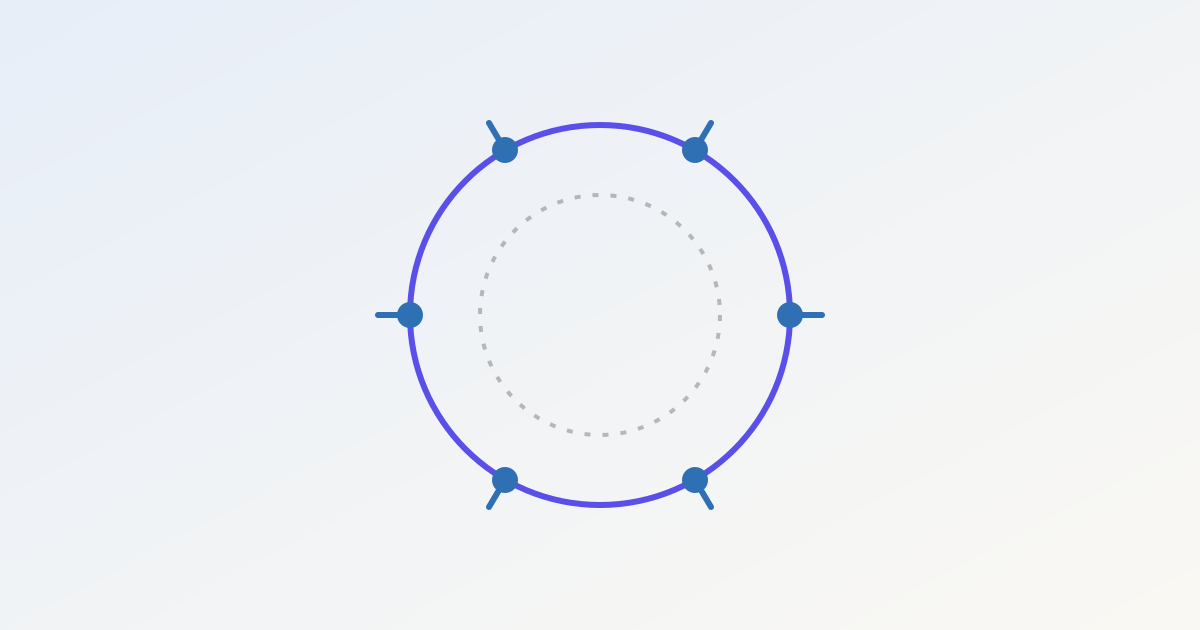
Distant galaxies rush away from us, and the farther they are the faster they go — not because we're special, but because space itself is stretching. What that does and doesn't mean.
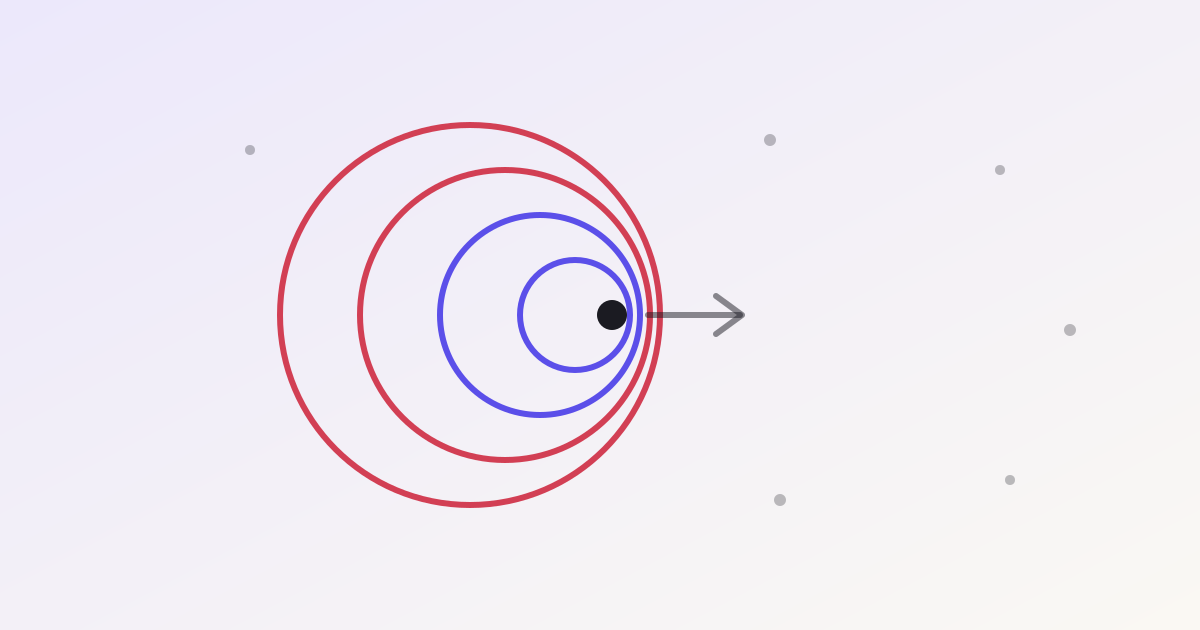
The falling pitch of a passing siren is the same trick we use to weigh unseen planets and clock fleeing galaxies. Why the change lives in the space between you and the source, never in the source itself.
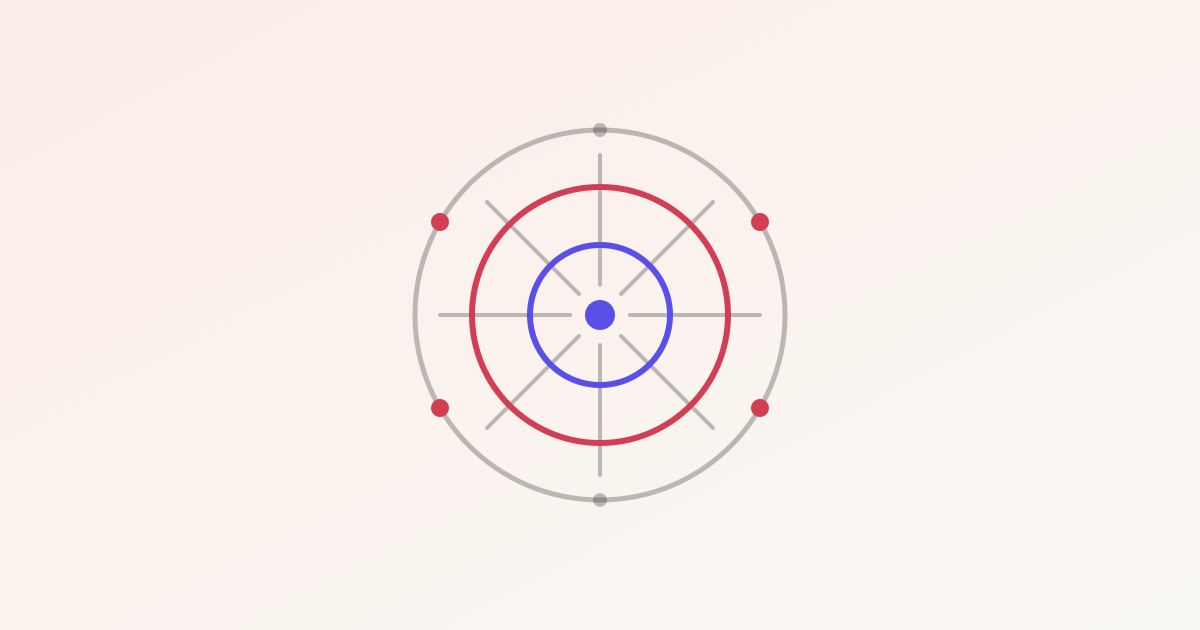
Not a guess and not an explosion in space. Three independent lines of evidence — the expanding sky, the leftover heat, and the cosmic recipe of hydrogen and helium — all point to the same morning.
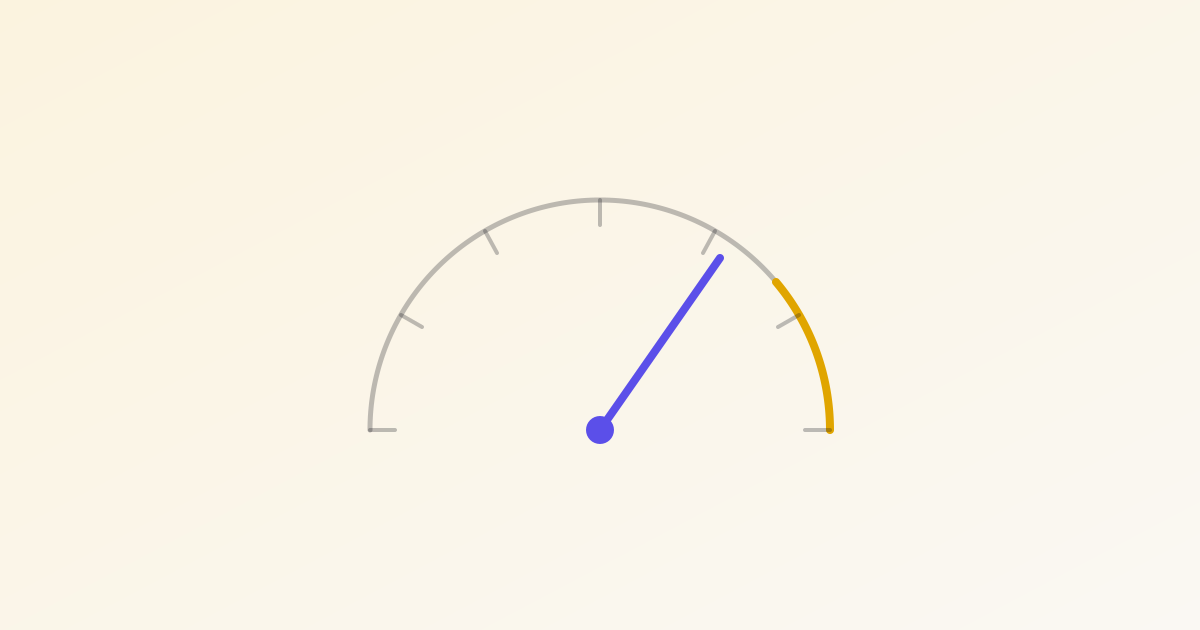
The expansion of the universe isn't slowing down — it's speeding up, pushed by something that makes up most of everything and that nobody understands. The biggest open question in cosmology.
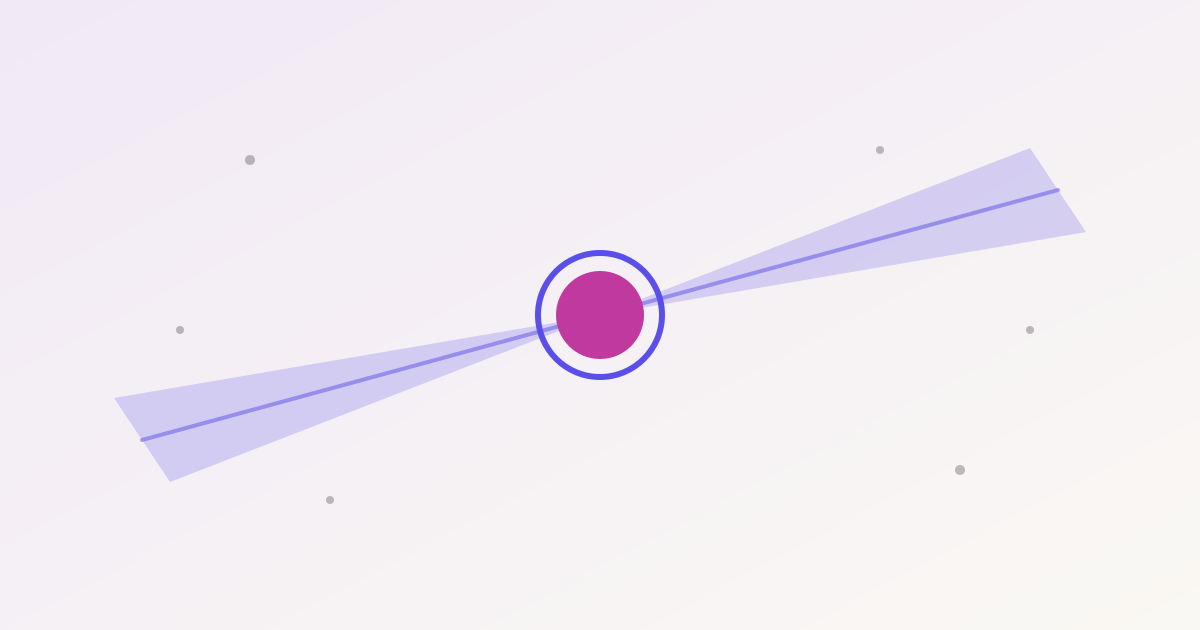
When a giant star dies, its core collapses into a ball the size of a city and the mass of the Sun — propped up by the same quantum rule that keeps you in your chair. Meet the neutron star.
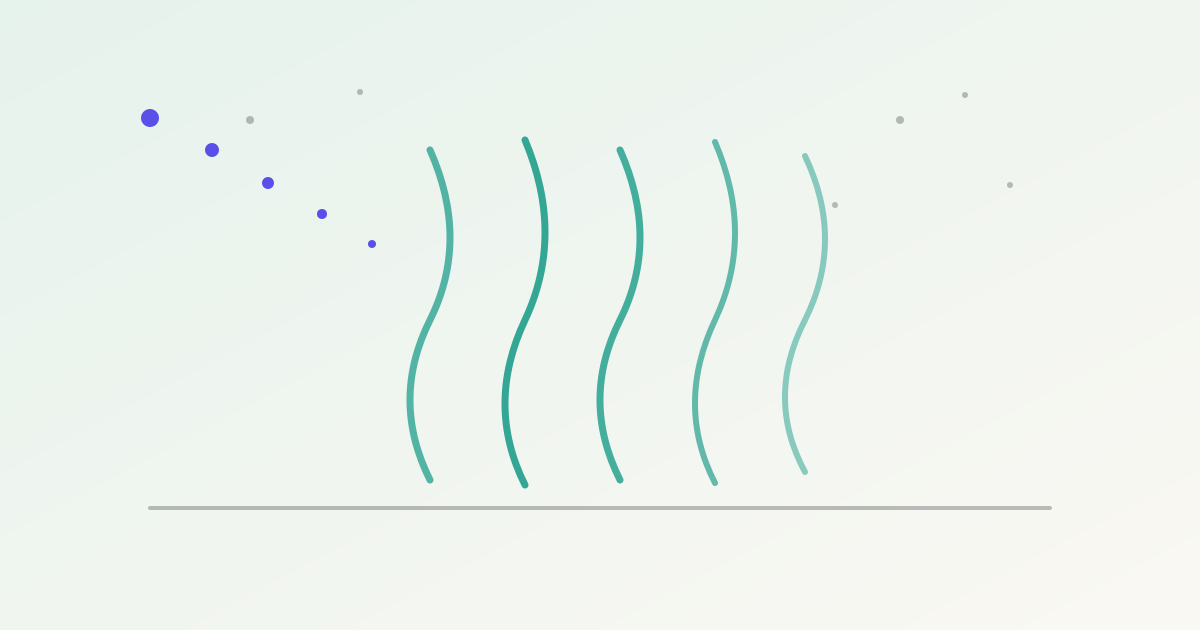
Not reflected sunlight, not a fire in the sky. The aurora is Earth's own air glowing — lit from within by particles the Sun throws at us and our magnetic field catches.
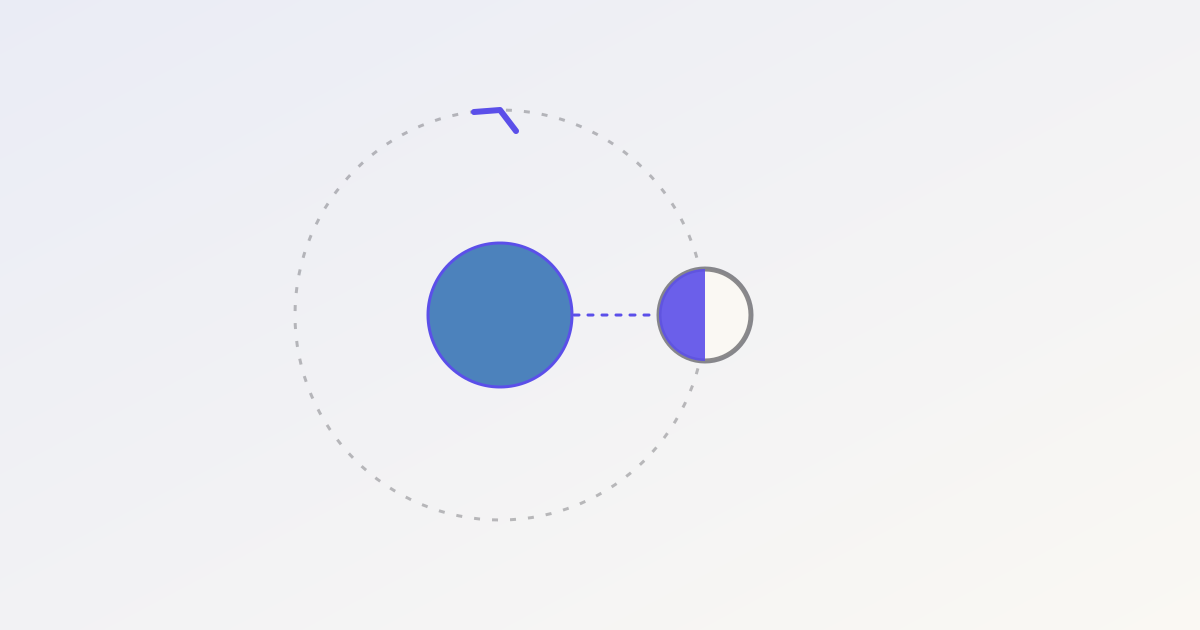
We only ever see one side of the Moon — which sounds like it doesn't spin. In fact it rotates exactly once per orbit, locked there by the very same tides it raises in our seas.
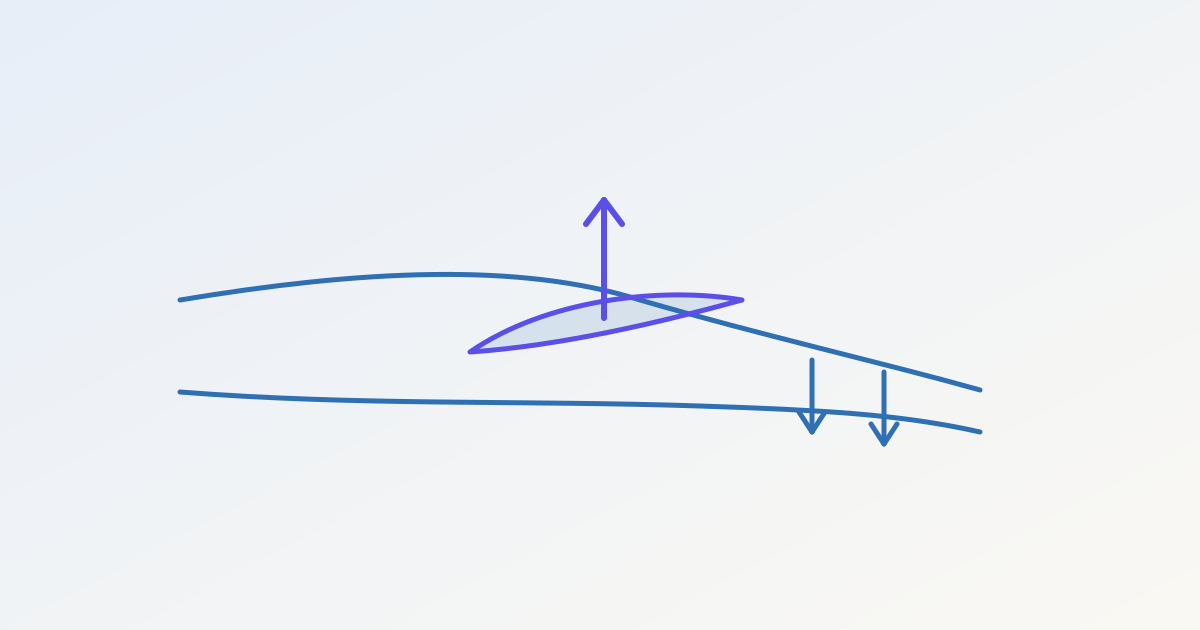
The famous curved-wing, equal-transit-time explanation for lift is wrong — planes fly upside down, after all. What really holds a jet up is simpler and stranger: it throws air at the ground.
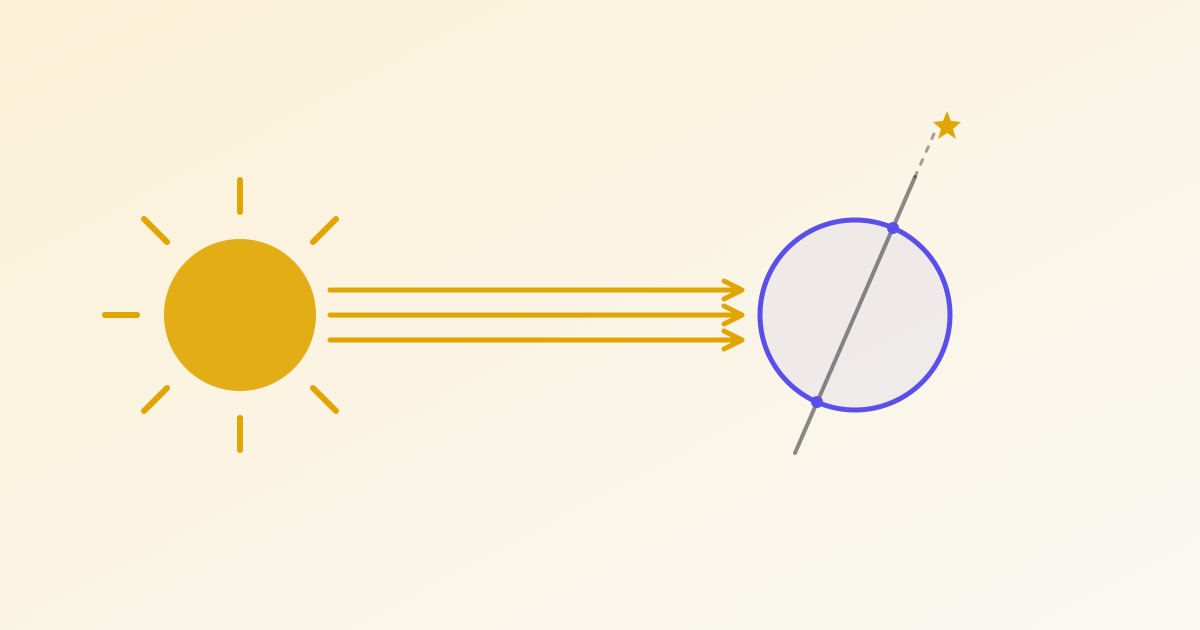
The Earth is closest to the Sun in January, during northern winter. So seasons can't be about distance — they're about a 23.5° tilt, and the proof is that Australia has summer at Christmas.
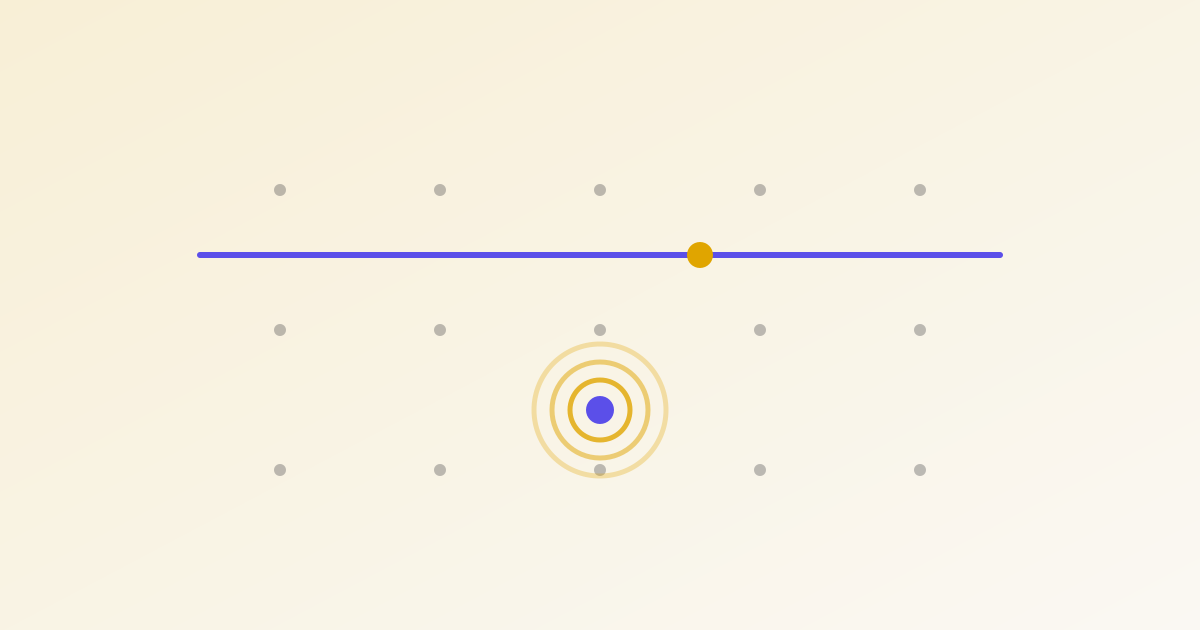
The Higgs isn't cosmic syrup slowing things down. It's a field that some particles interact with and others ignore — and that interaction is what we call mass. The honest version.

Everything you've ever touched is made from a handful of particles in two families, held together by force-carriers. A tour of the most successful — and most unfinished — theory in physics.
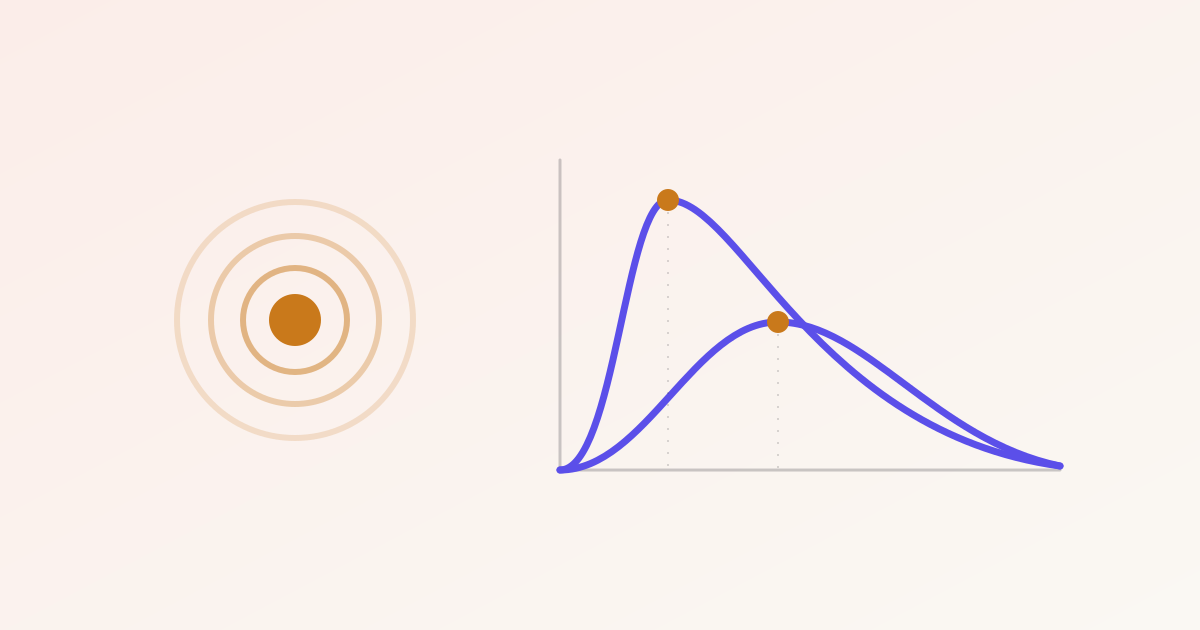
Classical physics predicted that a warm object should blast out infinite energy. The fix — Planck's reluctant guess that energy comes in lumps — accidentally started quantum theory.
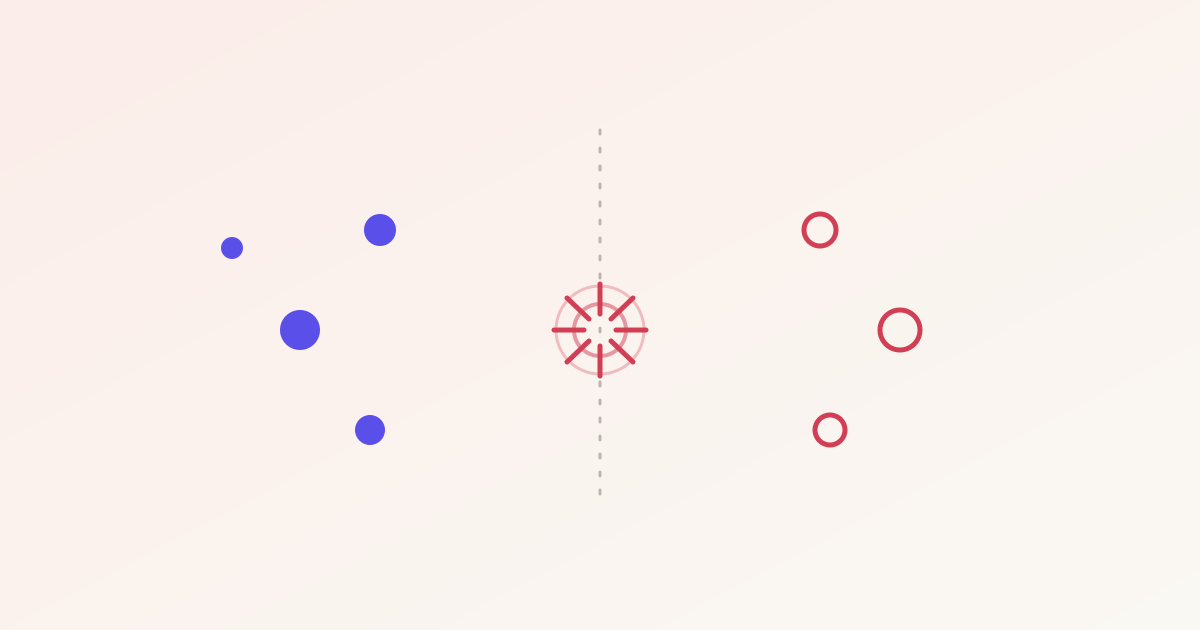
Every particle has an opposite that annihilates it in a flash of energy. The Big Bang should have made equal amounts — yet here we are, made of leftovers. Where did the antimatter go?
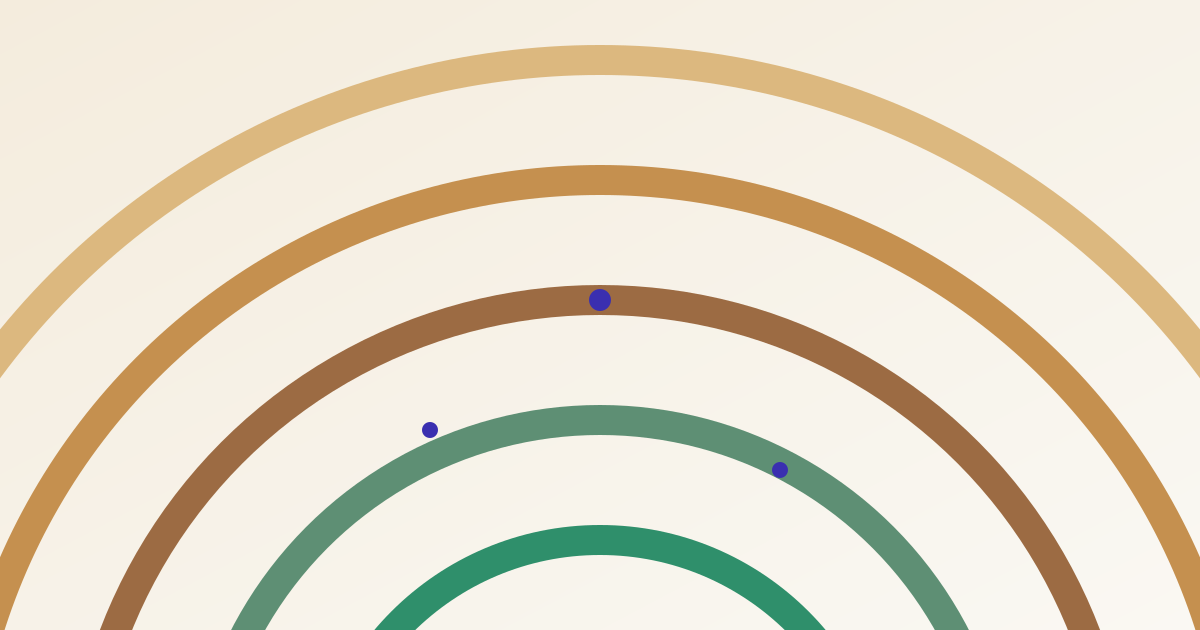
We didn't count tree rings to get there. The age of the Earth comes from radioactive atoms ticking inside meteorites — a beautiful chain of reasoning from ions to a number. What's rock-solid, and what's still argued.
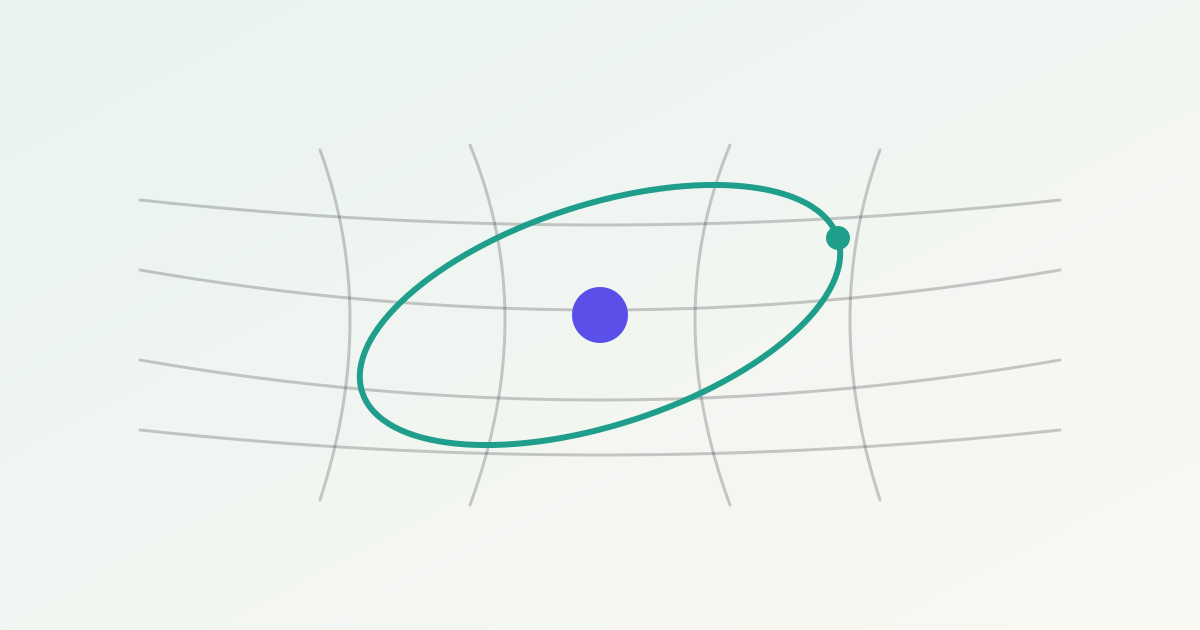
Newton said gravity pulls. Einstein said nothing pulls — things just fall along the straightest path through curved spacetime. Here's how to picture it honestly.
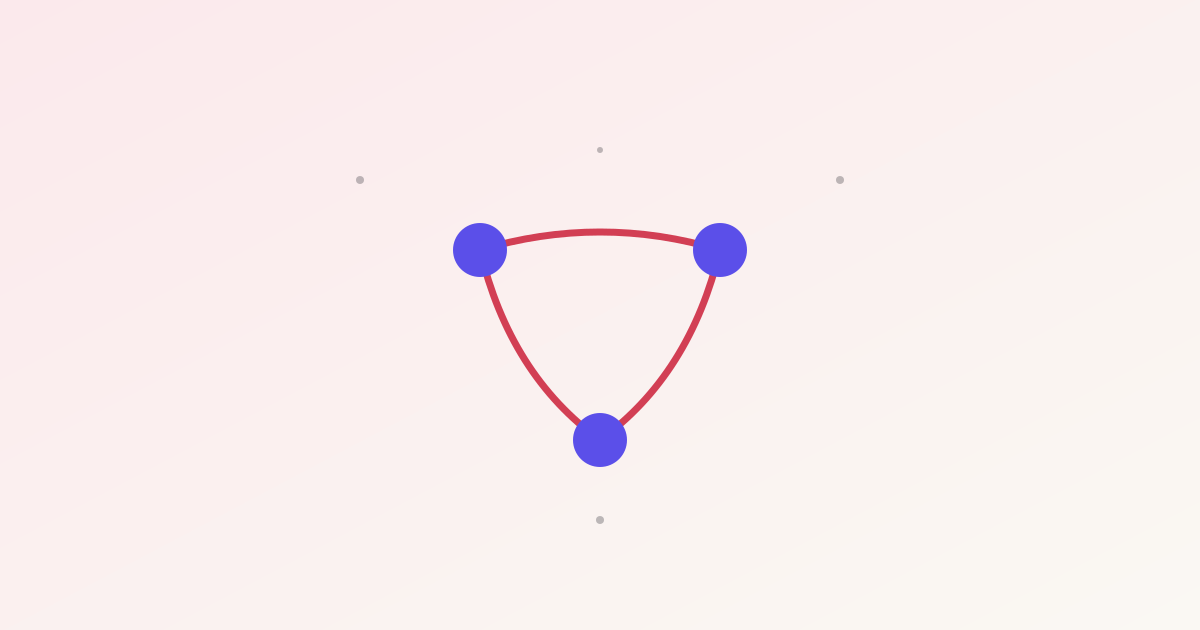
Cram a dozen protons into a nucleus and their like charges should blow it apart instantly. Something overwhelms that repulsion at close range — the strongest force there is, and the source of nearly all your weight.
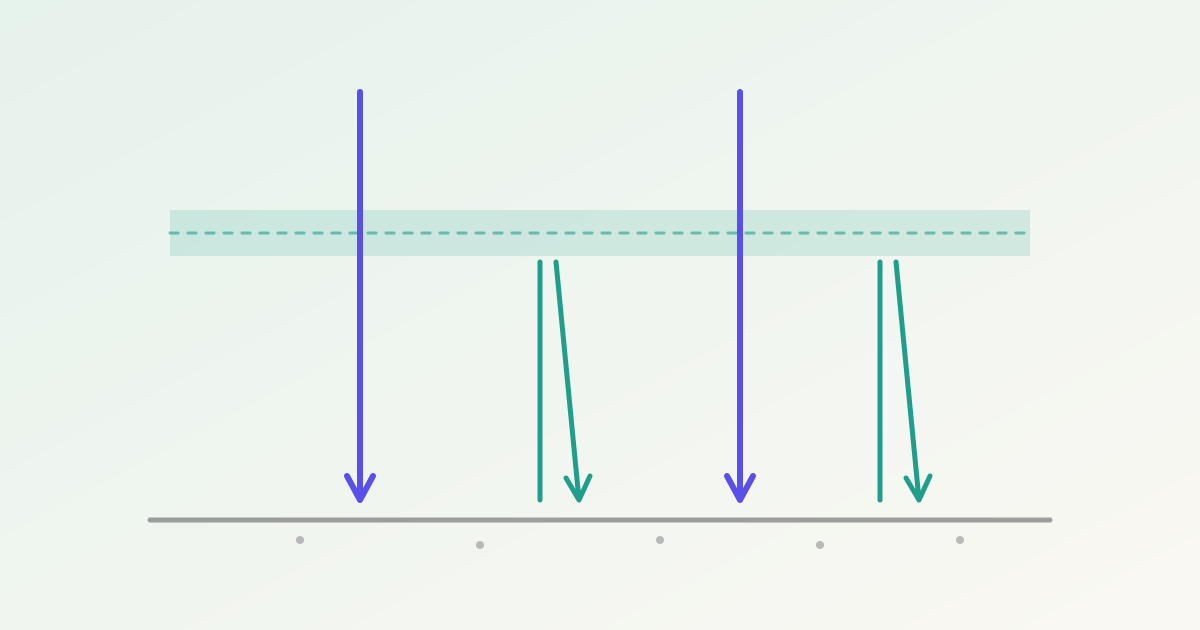
Greenhouse gases don't trap heat like a blanket, and a greenhouse barely works the way the name suggests. The real mechanism is a one-way filter for light — and it's the reason Earth isn't a frozen rock.
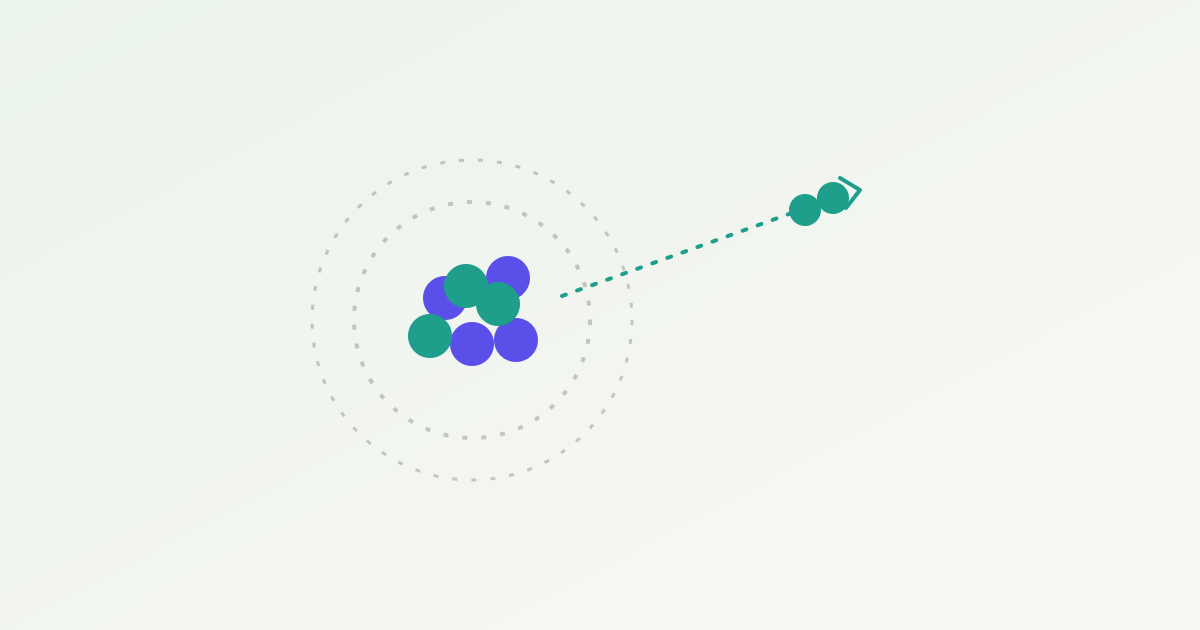
A radioactive atom doesn't wear out, weaken, or count down. It has no memory of how long it has waited — and no one can say when it will finally go. Randomness, built into the foundations.
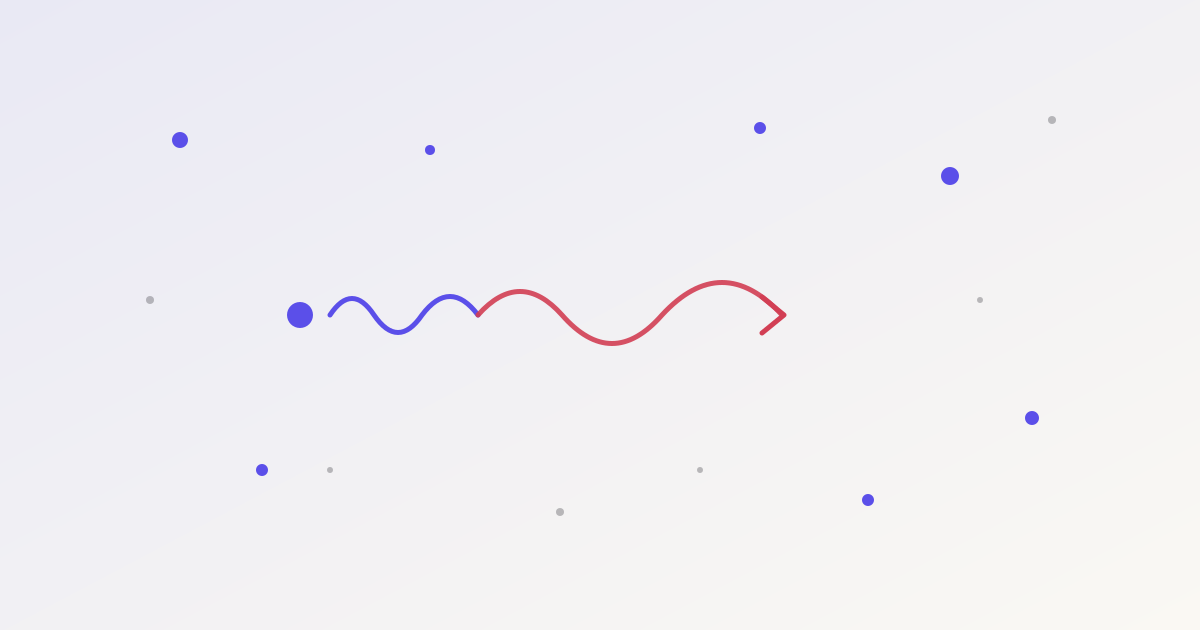
In an infinite, ageless universe, every direction you look should end on the surface of a star, and the whole sky should blaze like the sun. It doesn't — and the reason is the deepest fact about the cosmos.
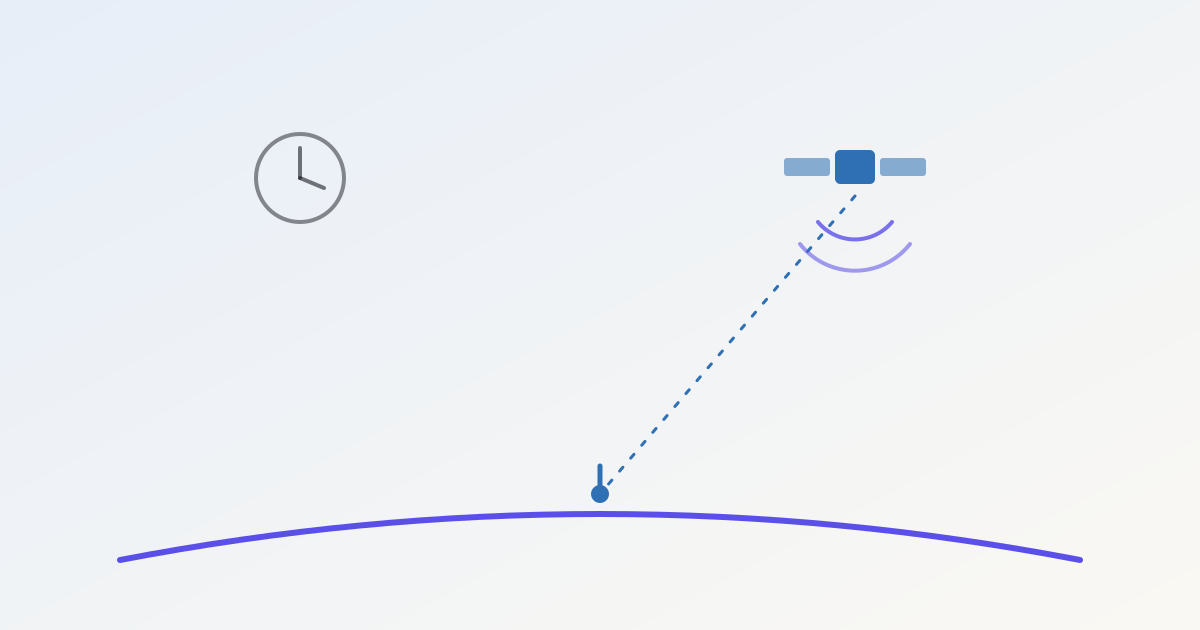
Satellite navigation would drift miles off within a day if it ignored relativity. The clocks in orbit run fast — and correcting them is the most routine test of Einstein's theories ever built.
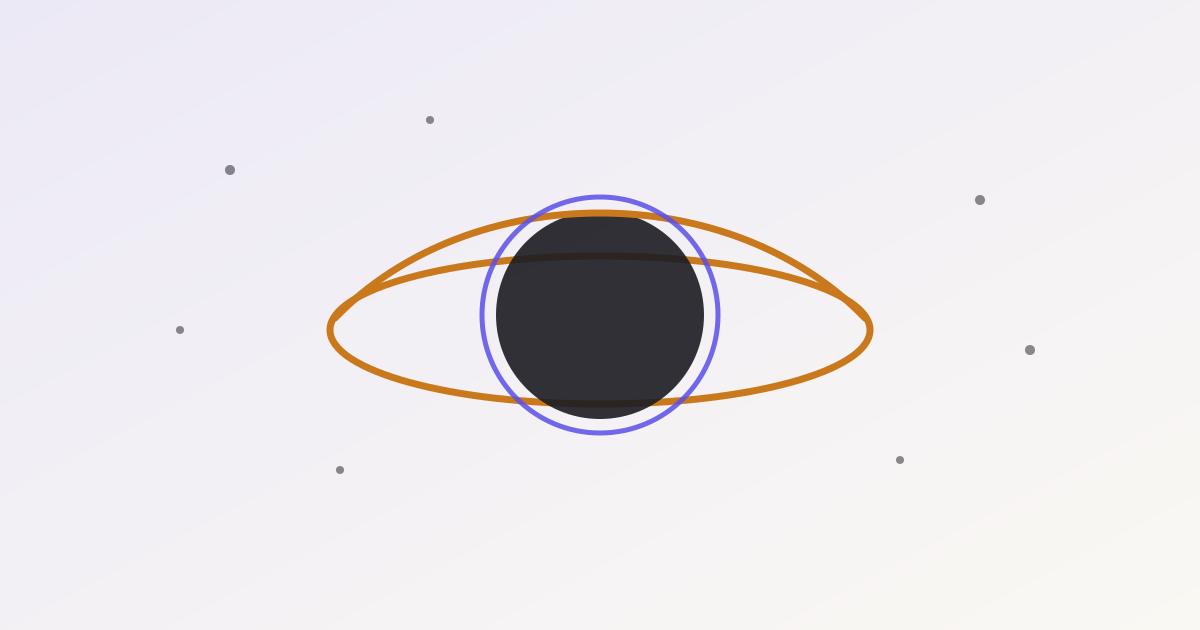
Not a hole, not a vacuum cleaner, not a tunnel. A region where spacetime curves so hard that 'the future' points inward. What the event horizon is, and why the center is an open problem.
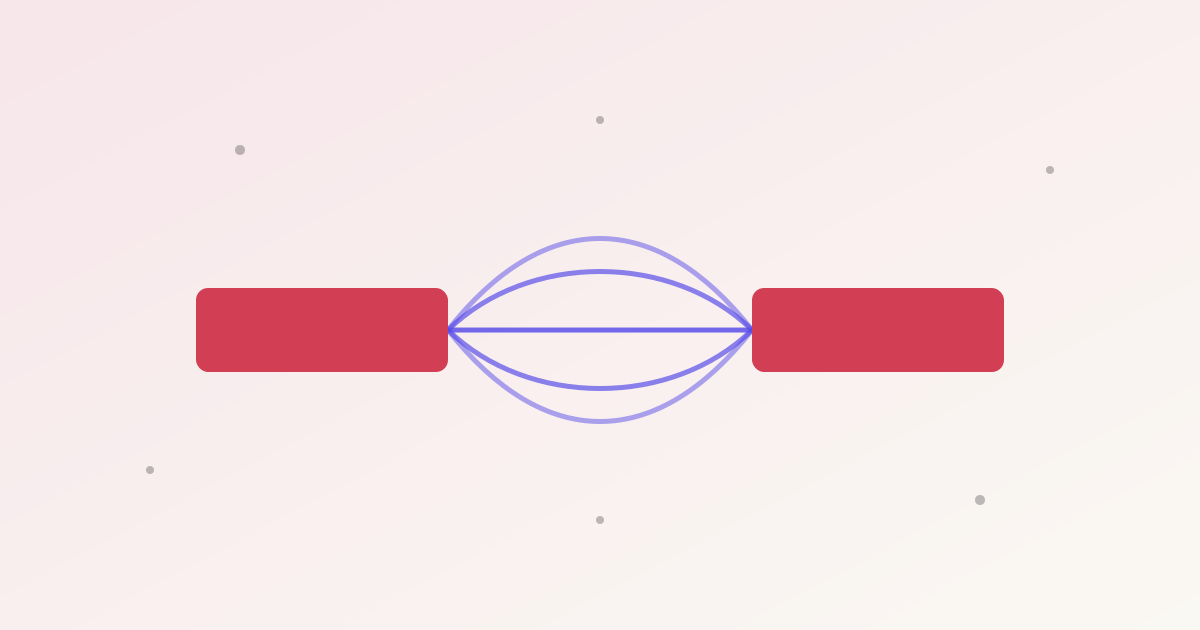
A fridge magnet feels like its own separate force of nature. It isn't — magnetism is just what electricity looks like once you take relativity seriously.
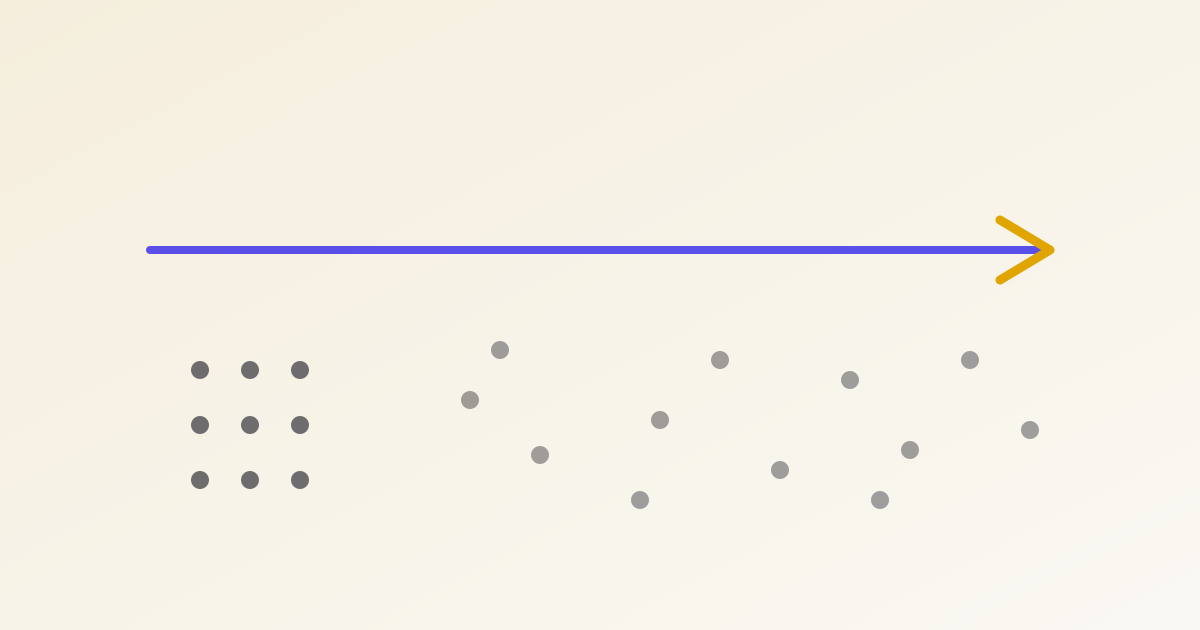
Almost every law of physics works the same forwards and backwards. So why can you unscramble an egg only in memory? A notebook on entropy, initial conditions, and the one-way street of time.

Entropy isn't disorder and it isn't decay — it's counting. A plain-words tour of what it actually measures, why it almost always grows, and where it still puzzles physicists.
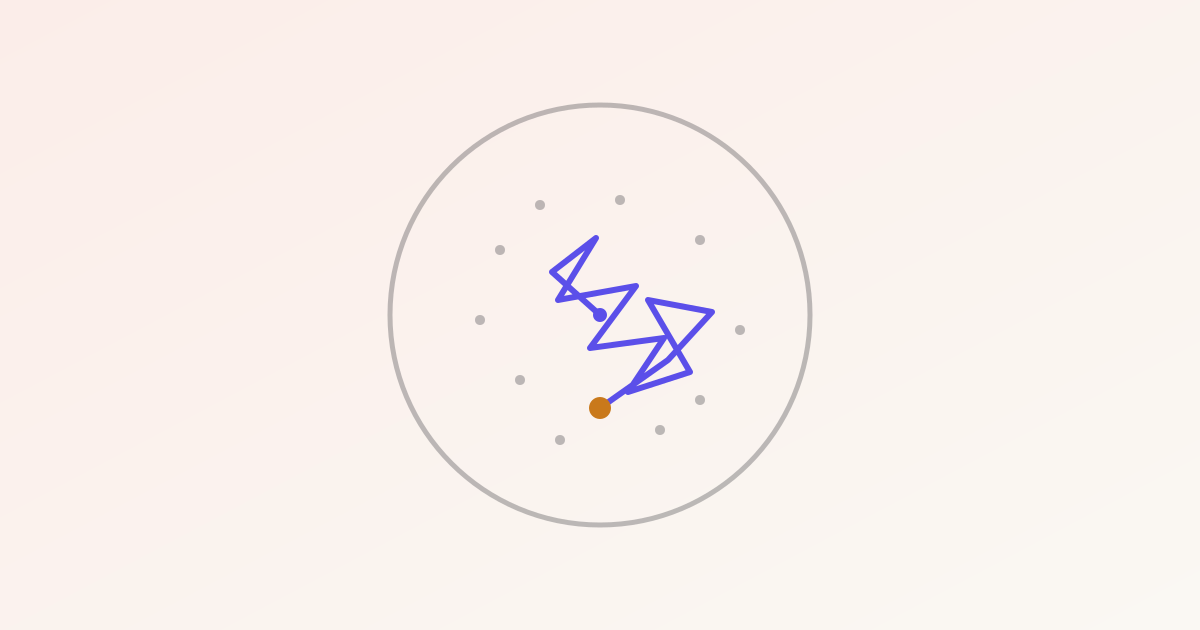
A speck of pollen twitches under a microscope, shoved by molecules too small to see. Einstein turned that jiggle into a measurement of atoms — and ended the debate over whether they exist.
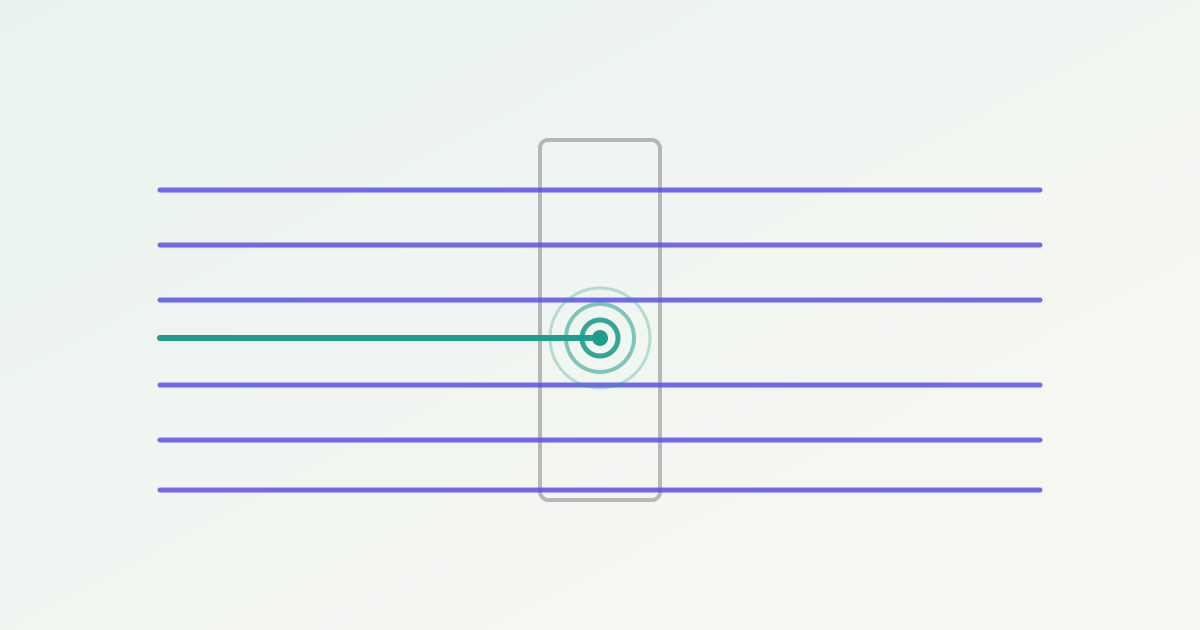
Trillions pass through your thumbnail every second and almost none ever touch a thing. How we caught the universe's most antisocial particle — and how it rewrote the Sun's story.
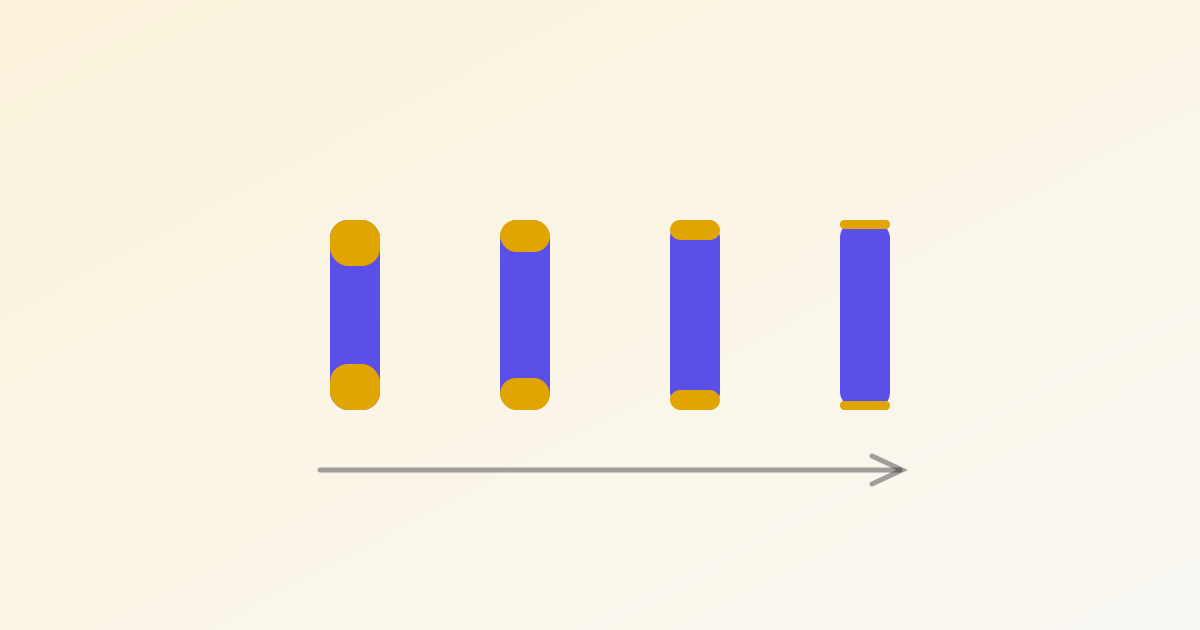
An open notebook on senescence: is aging a program, an accumulation of damage, or the slow tax of entropy on a living machine? Tracking the leading theories and where I currently lean.