Why We Have Seasons (It Isn't the Distance)
The Earth is about 5 million kilometres closer to the Sun in January than in July. If distance made the seasons, January would be high summer. Ask anyone in Oslo how that's going.
The answer everyone reaches for first
Seasons feel like they ought to be about distance. The Earth loops around the Sun on a path that isn't a perfect circle, so surely summer is when we swing in close and winter is when we drift away. It's tidy, it's intuitive, and it is flatly wrong.
We are in fact nearest the Sun in early January — a point called perihelion — and farthest in early July. Northern winter falls at our closest approach. And if distance were the cause, the whole planet would warm and cool together, every hemisphere in lockstep. Instead, when it is July in Norway it is January in Australia. Something is treating the two halves of the Earth in exactly opposite ways at the same instant. Distance cannot do that. A tilt can.
One tilt, doing two things
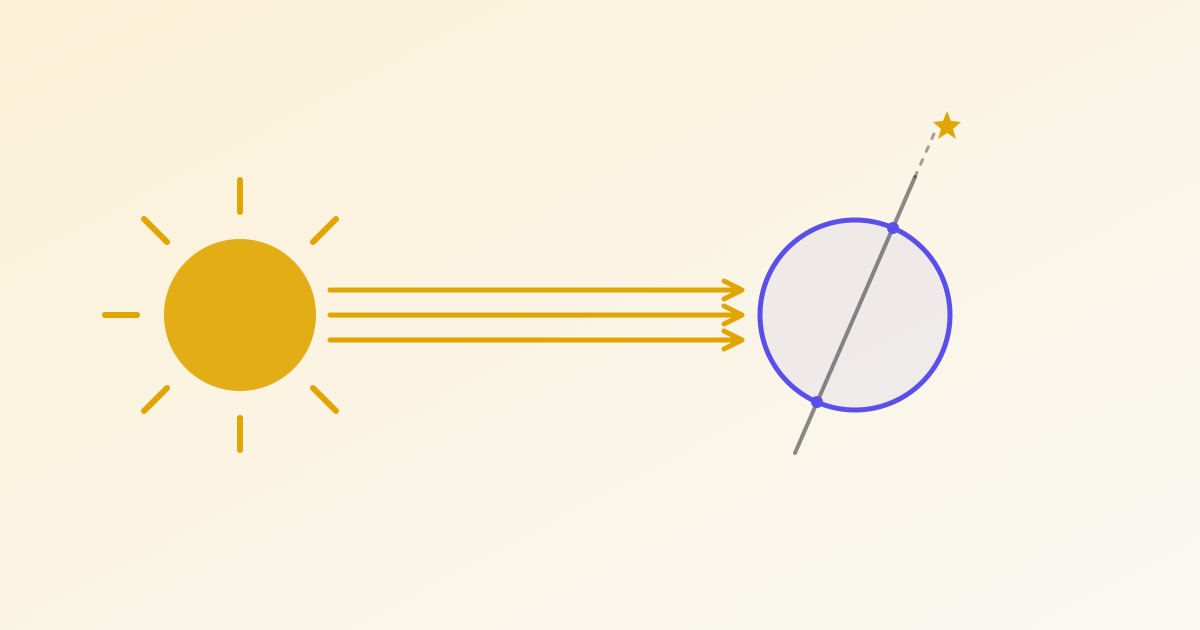
The Earth spins on an axis tipped about 23.5° from upright, and here is the load-bearing detail: the axis keeps pointing the same way in space all year, toward the star Polaris. It does not lean over to follow the Sun. So as we ride around our orbit, there is a stretch where the Northern Hemisphere tips toward the Sun and, six months later, a stretch where it tips away. The tilt is fixed. Our position around the Sun decides which hemisphere is currently favoured.
Leaning toward the Sun does two things at once, and both push warmth the same direction:
- The Sun climbs higher. Its rays come down steeper, so a shaft of sunlight lands concentrated on a small patch of ground rather than smearing across a wide slanted one. Same energy, less area, more heat. In winter the noon Sun rides low, and its light must also graze through far more atmosphere to reach you — the same long, slanting path that reddens a sunset.
- The days grow long. The favoured hemisphere spends more of each turn in daylight, warming for more hours and cooling for fewer.
The proof is in the opposite hemisphere
The clinching evidence isn't in a textbook — it's that Argentina grills outdoors on Christmas Day. Two hemispheres, one distance from the Sun, opposite seasons. Only the tilt explains that.
A couple of honest footnotes. The hottest weeks of summer arrive well after the longest day, because land and sea take time to soak up heat — the same lag that keeps late afternoon warmer than noon. And the axis does slowly wander, tracing a circle over about 26,000 years, but that is far too gradual to be the summer you're feeling now.
The Sun isn't closer in July. You're just tilted to catch it better.